
Editorial note: This article was written in mid-October as a contribution to internal discussion within the Revolutionary Communists of India, to clarify our understanding of the movement against Gyanesh Kumar and the questions it raises. We are publishing it now, in advance of the CJP’s demonstration in Kochi on 7 November. Some details have moved on since it was written, but the analysis and the programme it sets out remain as relevant as ever.
Lenin once said that a man on the edge of a cliff does not reason. These words apply to the Modi regime today as much as they did to the tsar a century ago.
For the last two weeks, tens of thousands of workers and youth have flooded the streets of Delhi and Mumbai, facing the most vicious police crackdown seen in the capital in over 50 years, since the time of the Emergency under Indira Gandhi.
The Gen Z revolution is threatening to sweep across India, and the Modi regime is rightly terrified of the social explosions it has prepared.
Who is Gyanesh Kumar?
In late September, the CJP – the satirical party set up by Abhijeet Dipke, which led to the protest wave that unseated Education Minister Dharmendra Pradhan only 3 months ago – put out an ultimatum. Chief Election Commissioner Gyanesh Kumar, responsible for the disenfranchisement of 13.4 crore voters, would have to resign in 48 hours, or the CJP would announce a protest. On the same day, Congress, not wanting to be left out, announced nationwide protests.
The CJP, despite its accidental character, and the repeated mistakes of its leadership, ultimately led a movement which brought down a government minister. For millions of young people in India, this gives them a certain authority and credibility. The youth, under the CJP’s leadership, achieved a bigger blow to the Modi regime than the rest of the left has in decades. For that reason, when Dipke put out this call, once again, the deep anger that exists in Indian society was given an avenue to continue the struggle against the hated Modi regime.
CEC Gyanesh Kumar is a paid-off pawn of the BJP and the capitalist class. An exposé in the Indian Express on the 23rd of September shows how he, through the Election Commission, bureaucratically and single-handedly acted to use his position to carry out the dictates of the Modi regime. Kumar used the Special Intensive Revision (SIR) process (which exists as an administrative procedure to update the electoral roll, removing those who have died etc.) to remove 13.4 crore voters, disproportionately Muslims, Sikhs, Dalits, Adivasi and other oppressed minorities. Further, he amended Form 6, the form citizens must fill out to be added to the roll, by adding a question about the ethnicity and electoral status of the grandparents of the applicant. By doing so, Muslims, refugees and migrants from across South Asia, especially those whose families come from Pakistan or Bangladesh, are unable to rejoin the roll. This is an attempt to sneak in the implementation of the National Register of Citizens, from the hated Citizens Amendment Act (CAA), which while passed in 2019 and notified in 2024, was not transformed into a nationwide NRC after a wave of outrage and protests defeated it in 2019. Workers and youth flooded the streets, outraged at this naked attempt of the regime to use Hindutva to divide and conquer the working class.
The whip of counter-revolution
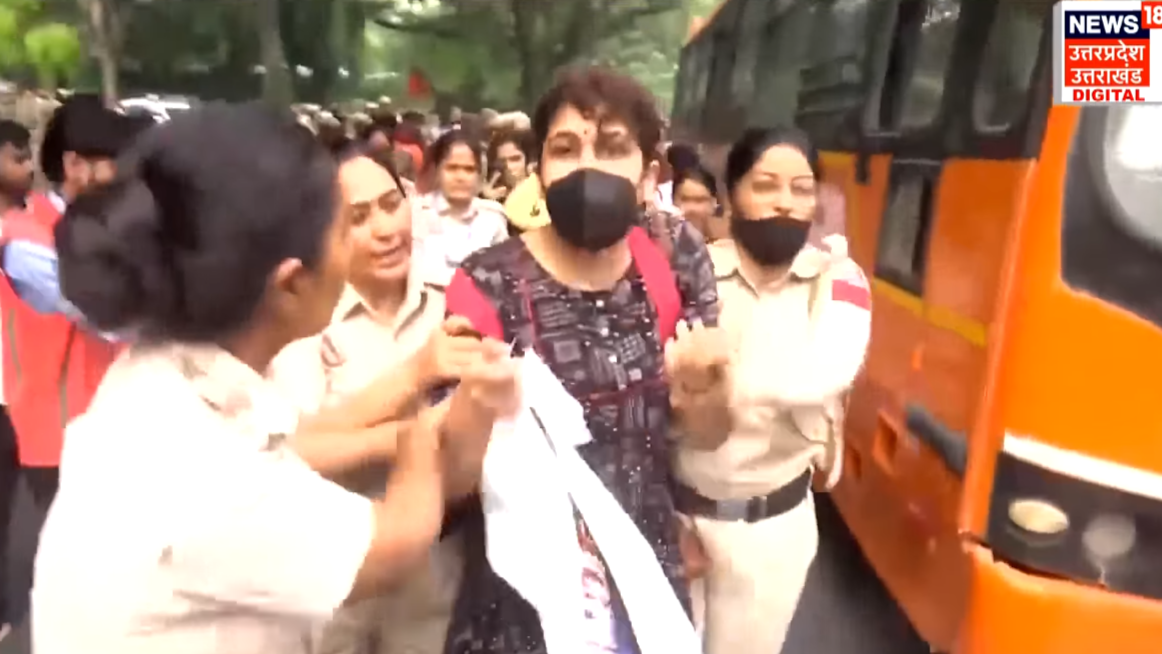
On the 2nd of October, the “Jail Bharo” protest was called in response to the silence from the Government. Forty thousand young people came out in Mumbai and Delhi to protest. Hundreds of police officers were deployed, a dozen checkpoints and metro stations were shut down to make the protest harder. A Section 163 order, banning gatherings of more than 4 people was imposed. In Mumbai, a static demo and rally took place whilst protestors were barricaded inside Shivaji Park. In Delhi, the left – AISA, SFI, DYFI and others attempted a march from Ashoka Road to Jantar Mantar. They were set upon by the police, who detained over 700 people.
One protestor, standing at the edge of the crowd said sarcastically:
“I salute the Delhi police. They’re doing a good job, using our parents, our grandparents’ tax money to beat us up very effectively. Shame on the Delhi police, and the Home Ministry. We were just here to call for the resignation of Gyanesh Kumar, but now I think this whole-”.
At which point two officers shove and harass the protestor and the journalist, before dragging the man away across the pavement. If they were looking to put a halt to this man thinking about the real nature of the “special bodies of armed men”, they sorely miscalculated.
Amit Shah, by unleashing the cops on protestors, fired the starting pistol on the second wave of the CJP movement. The whip of counter-revolution backfired in the face of the regime. The irony of an undemocratic crackdown on a peaceful protest on Gandhi Jayanti (the national holiday commemorating Mohandas Gandhi’s birthday) was not lost on protestors.
Social media was awash with outrage at the shameless brutality of the police. Protestors were beaten indiscriminately. Journalists and camera crews were not spared. An officer, ACP Vivek Bhagat, sexually assaulted 3 women from the press when they dared question the police.
Protests were quieter over the following workweek, whilst for millions of workers and youth, the response of the police became something they saw on their phones, heard about in their offices and dorms, and something that prompted them to think. AISA held a smaller protest in Jadavpur on the 6th. Rahul Gandhi and other INDIA MPs were detained near the Shangri-La on the 7th, and then over 2000 protestors came out in Bengaluru on the 8th, a foreshadowing before the next explosion on the 10th of October.
Crackdown
Shah’s thugs responded with their own preparations. Delhi was transformed into a fortress. 45 stations were shut down. Over 30 checkpoints were set up. Thirty thousand officers and paramilitaries were deployed from the CAPF and even the Border Force. The internet was shut down, schools, colleges and courts were moved online. Key transport routes, like the Rajdhani, Shatabdi and Tejas services, had all their trains cancelled. The ground was set for a showdown.
All of this is a sign of the sheer panic at the heart of the state apparatus in Delhi. Kumar’s colleagues themselves are the ones who attempted to rein him in. They complained about his actions 14 times, and were ignored. Shah’s crackdowns in the summer had already shaken people’s faith in the police, who were sent out repeatedly to beat indiscriminately – first workers in June, then students in July. Dharmendra Pradhan’s resignation and Modi’s panicked videos only served to further shatter his image as a strongman. The institutions of the state have been increasingly discredited, and the Modi regime, at the head of an economy that is increasingly exposed to world events, which is underdeveloped and uncompetitive on the world scale, can do nothing to restore that faith, or even fix the corruption. In this situation, what alternative do the ruling class have except frantic repression?
Dipke, Saurav Das, and Ashutosh Ranka were arrested the second their plane touched down, a “preventative arrest” to stop them leading the protest. Whilst imprisoned, Dipke’s grandmother had died, and out of spite, he was denied the opportunity of a phone call until 3:30 am. These leaders now have a one-year “no breach of peace” bond, effectively attempting to gag the CJP. Wisely, Dipke had pre-recorded a video naming Ajinkya Shinde as acting leader of the CJP in his absence before his arrest.
Despite all these preparations and crackdowns, scattered protests broke out across the capital. On the morning of the tenth, once again the top of the CPI(M)’s leadership were arrested on their march towards Jantar Mantar. The AISA leadership organised their own backup demonstration 10km away at Dilli Haat (an open-air market square), where many were detained – including Neha Bora, Yogendra Yadav and Prashant Bhushan.
Harsh Yadav, an independent journalist who has been covering the CJP movement, was arrested on the 10th, after police came to his hotel room and targeted him for an arrest. BBC journalists were assaulted. Sara Khan from Peek TV was assaulted by a police officer. Fida Fathima, from Maktoob, was surrounded and suffered Islamophobic abuse by BJP goons posing as press, whilst police did nothing. Overall, the Committee to Protect Journalists counts at least 37 journalists detained and over 200 takedown orders for YouTube interviews, recordings and social media posts about the event.
In response, the CJP on the 11th called for daily, all-out protests until victory. On the same day, the Delhi Police removed Jantar Mantar from the list of approved protest sites.
Rahul Gandhi retakes the stage
On Monday the 12th, Congress announced another protest, “Chalo Delhi”, led by Rahul Gandhi. The rest of the INDIA bloc, the Communist Parties and AISA joined. The CJP were notably absent. Gandhi would comment that “there are no parallel protests, they are all part of the same movement”.
According to their own estimates, tens of thousands people joined a march to deliver a petition. For a party so hated, this is significant. The protest marched on the supreme court, being stopped by police 200m away from its doors. In the evening, the petition was delivered. CJI Surya Kant – who was the man who called the youth “Cockroaches” in the first place – refused to meet with Gandhi, but listed the petition for Tuesday 13th.
According to reports, the police were much more lenient on the demonstration than elsewhere. Only the SFI reported police brutality, once they were secured in vans away from the cameras. No detentions were reported by the Delhi police from the march at all. The next day, when the CJP leaders and about 20 volunteers hopped the barricades around Jantar Mantar, they were all arrested! Turns out the lathis are only for those who might pose a threat to the system, not the loyal opposition!
Constitutional Illusions
These events are of extreme significance. The movement, having just won a victory 12 weeks ago, is once again in the ascendant. The manoeuvers of the INDIA Alliance, Rahul Gandhi’s ‘rebrand’ as the voice of the youth, and the apparent increase in preparation and boldness of the leadership of the CJP are all symptomatic of this ascendance. Under the pressure of the youth, the decades of ossification of the left in India is being directly challenged. In their eyes, they either must get on the bandwagon, or get left behind.
Rahul Gandhi has positioned himself as a fighter for the demands of young people across India. In countless tweets, videos, columns, he speaks about the corruption at the heart of the regime, he talks about the need to reform India, and so on: “this government will fall”, “[this struggle is] worth fighting and dying for”. But as one of our comrades correctly pointed out in a video recorded at the march on the 12th:
“We need to ask those who are in the crowd today: The repressive laws the BJP are using – the UAPA, AFSPA, those were not invented by them. It is Congress who passed these laws, the BJP are just using them. What alternative will Congress really pose?”
In fact, all of the lefts and the reformists are only disagreed on who gets to lead the movement – when it comes to what they stand for, all of them sing the same tune – that liberal democracy is sacred, that it is a tool for us all, and that it must be protected from the evils of the BJP.
“It is our sacred duty to protect the Constitution of India.”
“Gyanesh Kumar will go. Then the repair of democracy will begin.”
Rahul Gandhi
“The Polit Bureau[…] demands an immediate halt to the SIR process. The integrity and democratic functioning of the ECI must be restored.”
CPIM official statement, 23rd September
“A critical juncture has arrived. […] Democracy is at stake. […] Constitutional principles beckon us.”
People’s Democracy, (Paper of the CPIM), ‘Enough is Enough’, 7 October.
“Democracy is not abstract but a promise[…] that common people will decide[…] We promise that we will not allow you to destroy our democracy.”
Neha Bora, AISA. Speech in Jadavpur, 5 October.
By contrast, the CJP, while calling for the same thing in their press conferences, understand the mood a little better when they talk directly to the youth online.
“Gyanesh Kumar is the biggest anti-national of this country. He should resign immediately because he is the biggest threat to India’s democracy. […] You have turned the entire concept of democracy upside down.”
Press Conference
“The CJP will neither back down nor be intimidated. October 10 will go down as the beginning of the end of this dictatorship.”
Abhijeet Dipke, X.
The CJP are about to be put to the test. They are reformist in programme and radical in words. For now, they are surviving on the goodwill they won in the summer, but without a victory, once again questions will arise as to their methods and leadership. That is why they are posturing to the left of the rest of the opposition. They understand what the rest of the left do not: that while the attendance at these demos leads to a heterogeneous mix of thousands of young people, many new to politics, many with their own liberal illusions, the basis of the energy of the movement is not pro-democracy, but anti-regime.
Anti-regime
And for us, notably, this understanding is at its most explicit and condensed in the most advanced layer of the youth.
This is why the curve of attendance of this movement differs greatly from the protests in the summer. Then, the CJP, untested, took days of slow demos and a hunger strike, before the millions of followers turned into people on the ground. Even then, it was the real march – the “Sansad Chalo” that really signalled the beginning of the showdown against the state.
This time around, tens of thousands came out on the first day of the protest, 2 October, across India. Protests were concentrated in Delhi and Mumbai, but spread from Kathiawar to Kolkata, from Kashmir to Kerala. Why? Did tens of thousands of young people suddenly become staunch believers in bourgeois democracy?
No! The rapid resurgence of the mood shows instead that there is still a great appetite for removing the entire Modi regime. Gyanesh Kumar again is, in some sense, an accidental target. Corruption, election fixing, the influence of bribes and big business, these are so commonplace in India that fixed elections are a cliché in films and TV shows. Very few have any real faith that they can “clean up” democracy – just ask the protestor who we quoted above. What they identify in the movement is a battle against the regime, which they absolutely have the power to take down, as shown by the resignation of Dharmendra Pradhan.
It is this recognition that Dipke is opportunistically tapping into with his radical rhetoric, to differentiate the CJP from the rest of the failed lefts, and paint support for the CJP as a battle to the end against the regime.
And we must agree with the sentiment. Absolutely, the only way to a real democracy – a workers’ democracy – must start first with the overthrow of Modi. But it must go beyond that, to an overthrow of the capitalist system itself.
The other “communists” involved in this movement are indistinguishable from the liberals. What they forget is what Marx and Engels explained in the Communist Manifesto, nearly 180 years ago:
The executive of the modern state is but a committee for managing the common affairs of the whole bourgeoisie.
Marx and Engels, Manifesto of the Communist Party, Chapter 1
On the question of Form 6 and SIR, the outrage is again not at the question of the holiness of elections. It is that these are blatantly attacks against the most impoverished layers in society, and an attack against minorities. The reaction to these is not in defence of democracy, but as a rejection of the divide and conquer politics of Hindutva and the BJP.
Since this was written
Since this article was written, events have confirmed its central argument. The CJP members arrested at Jantar Mantar on 13 October were sent to Tihar Jail, and their custody was later extended. When Dipke called a “Lehra Do Tiranga” march in their defence on 16 October, he was detained on his way there, arrested the next morning for supposedly breaching his peace bond, and released only on condition of no “breach of peace” for a year. Neha Bora was detained the same day.
Faced with this, the CJP leadership drew back. The call for “daily, all-out protests until victory” lasted less than a week. While Das and Ranka sat in Tihar, Dipke announced a pause in protests until Diwali and told supporters to spend the festival with their families. What the moment demanded was the opposite: a turn to the workers and their organisations to broaden the struggle. Radical words had met the limits of a reformist programme.
Into the vacuum stepped the INDIA bloc. On 30 October it staged a mock “public impeachment” of Kumar, and on 1 November, 21 opposition parties rallied at Ramlila Maidan, with police permission. Rahul Gandhi told the crowd that Kumar “will be removed”. Kapil Sibal promised that the fight would “start with Gyanesh Kumar”. Start with Kumar and go where? Back to the courts, the Constitution and the next election: precisely the safe channel we warned of. The CJP, insisting on its independence, stayed away. AISA shared the stage.
The state, meanwhile, has reached for the oldest weapon in its arsenal. On 5 November, Union Minister Jitendra Singh accused Dipke of taking money from US donors and Ranka from Pakistani politicians, without offering a shred of evidence. The same day, the Delhi Police Crime Branch summoned Das and Ranka for questioning. The Supreme Court, having refused to suspend Kumar in early October, is not expected to hear the petitions again until 17 November.
Tomorrow the CJP takes the struggle to Kochi, its first major mobilisation outside Delhi. We welcome it. But the lesson of the past month is that radical rhetoric cannot replace a programme capable of carrying the movement beyond the limits of the Constitution. Every arrest, every slander and every adjournment points to the same conclusion: Kumar is only the servant of a system, and it is the system that must go.
Which way forward?
Young people in India are at the precipice. The CJP and the rest of the left are jockeying for control over this anger and this mood, and seek to channel it into the safe avenue of left reformism. Dipke, astutely, will make the right noises now and again to differentiate the CJP from the rest of the left. But when it comes to the programme, these are one and the same, because none of them can risk the movement out-pacing them as it did in the summer.
The state has no alternatives in its arsenal except to ramp up oppression. They could afford to let Pradhan go, as a one-time appeasement. Further resignations would, as Dipke correctly pointed out, be a death sentence for the Modi regime. He would have no credibility left.
The movement, in the meantime, remains amorphous, and unclear on its principles. What our attitude to bourgeois democracy is, the role of the working class, the path forward, reformism or revolution. These are key questions that remain unanswered, and these questions are being raised very concretely by events.
This, above all, is what the ruling class are most terrified of. Demonstrations can be dispersed. Party leaderships can be arrested, but the masses of India are learning lessons. The struggle against Kumar, whatever its outcomes, is teaching people about the real nature of capitalism, and the real weakness of the Modi regime. In the face of that, there is nothing they can do. For now, the ruling class can only hope that either Shah or the opposition can channel the energy of the youth into safe channels. But they too understand that the genie is out of the bottle, and this problem will not go away. Sooner or later, the pitchforks will be out for capitalism itself.
What is the position of the Revolutionary Communists of India? First and foremost, we agree with the protestors. Gyanesh Kumar absolutely is an agent acting in the interests of the BJP, and of the capitalist class. His actions with Form 6 and the SIR are all, ultimately, in service of maintaining the status quo, in the process maintaining an environment where the Ambanis and Adanis of India can continue exploiting India, where Modi can stay in power, and over a billion people must continue to try to eke out an existence in the dirt on poverty wages with no say in the matter. Whether he resigns or is pushed, he likely will get to line his pockets in the process, too.
He is our first enemy. But his resignation will not be enough. Pradhan was replaced with Pralhad Joshi. He is an RSS ideologue responsible for releasing 11 men who were serving life terms for raping Bilkis Bano and killing her family in the 2002 Gujarat pogrom – orchestrated, of course, by Narendra Modi himself. This would be repeated again if all we won was the resignation of Kumar.
Neither will this be fixed by replacing this electoral commission with another body, as ultimately, as long as the capitalist class have billions at their disposal, they can continue to bribe, steal and cheat their way to whatever result they want.
The mass of workers and youth in India have two roads ahead – a continuation of the struggle towards the defeat of Modi, and onto the defeat of capitalism, or the dead-end of reformism and liberalism. This is why Congress, INDIA alliance and even the CJP leadership speak in constitutional terms towards restoring the clean image of the institutions of the state. If they cannot clean up their act and pull wool over the eyes of the masses, it will be them who will be swept aside next.
Workers and youth can only have faith in themselves, and the only way to fix this problem is to attack the system itself. That means Kumar and Shah are the first enemy, but they serve Modi, and he serves the capitalist class!
Our programme must then reinforce this. The Revolutionary Communists of India must demand:
- The immediate resignation of Gyanesh Kumar, re-addition of the disenfranchised voters to the electoral roll, the scrapping of Form 6 and the abolition of the Chief Election Commissioner and Other Election Commissioners Act, 2023.
- For a union boycott and strike of civil servants and government employees to stop any attempt at continuing to disenfranchise millions and continue the use of Form 6, which is the CAA by another law.
- The immediate resignation of Amit Shah, and an inquiry and legal investigation into the acts of harassment and brutality against workers and youth during both waves of the CJP protests and Industrial action this year, including the sexual harassment of female journalists on October 2nd-4th.
- The dissolution of the riot police, who brutalise innocent civilians and work with the RSS, replaced instead by squads of workers, organised and armed by the trade unions into action committees across religious and ethnic lines.
- The immediate institution of the right of recall of any and all government workers and ministers, accountable to the working class.
- Transparency in the operation of the CEC, open the books to the action committees.
- That the CJP’s original demand of the seizure of the media licences be carried through for those media companies which continue to lie and slander the protestors and the CJP, accountable to those same committees.
- The action committees to be set up across India, and for them to hand verify election results, not the Election Commissions’ paid-off representatives.
- For an all-out general strike to defeat the BJP and ensure the resignation of Narendra Modi, as the representative of the Indian ruling class who are responsible for the state of the country.
- For an ongoing struggle against capitalism itself!
Jail Bharo, Capitalism ko Khatm Karo!
Inquilab Zindabad!


