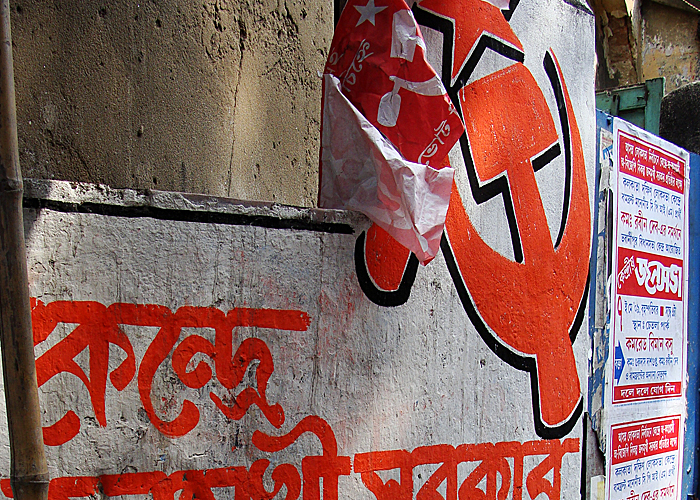
The April-May state elections were an historic turning point in Indian politics. Prime Minister Narendra Modi’s Hindu nationalist BJP conquered West Bengal, while the Left Democratic Front (LDF) lost control of Kerala. For the first time since 1977, not a single Indian state will be led by a communist party.
The Communist Party of India (Marxist) – the largest and, in words, the most radical of the two main communist parties – described the results in Kerala as a “serious setback.” This is something of an understatement. The Indian National Congress – the main party of Indian capitalism – won 63 seats. Its allies in the United Democratic Front (UDF) won another 39, giving the UDF 102 of the 140 seats in Kerala’s state assembly. Meanwhile, the vote share for the CPI(M)-led coalition of four parties, including the Communist Party of India (CPI), fell by 12 percent. These results are nothing short of a catastrophe.
However, this did not come out of the blue. It is the culmination of decades of decline for India’s communist parties, which have abandoned the ideas and methods of Marx and Lenin in favour of criminal class collaborationism. Let us look at the lessons for the working class and youth today.
Communists lose Kerala, Modi wins West Bengal
Despite the CPI(M) trumpeting its UN-approved claim to have ‘eradicated’ extreme poverty in Kerala, the reality of life under ‘communist’ rule consists of intolerable living costs, 15 percent unemployment and accelerating youth migration in search of better prospects. The LDF’s pretensions of leading a ‘corruption-free state’ also don’t tally with the nepotism and mismanagement that have infected its cooperative banks, nor allegations of running a gold smuggling racket.
While the CPI(M) blamed the outcome in Kerala on “the financial constraints imposed by the BJP-led Union government”, the truth is they have also carried out attacks on working people on behalf of the capitalist class of Adani and Ambani – as we shall see. Rather than focusing on class issues, the CPI(M) and CPI emphasised ‘democracy’ and ‘secularism’ – in other words, they sounded no different from Congress, who seemed like a more viable anti-Modi vote. Thus, the communist parties were routed from ‘Red Kerala’.
But while losing Kerala was a massive symbolic blow to the remnants of India’s communist left, the results in West Bengal represent a colossal victory for the BJP. This state of 100 million people has proved a stubborn bulwark against Modi’s dominance of the country since his election as Prime Minister in 2014. In a remarkable reversal, the BJP picked up 207 of the 294-member assembly. The incumbent Trinamool Congress (TMC), a regional breakaway from Congress, was reduced to 80 seats.
The TMC and its leader, Mamata Banerjee (who lost her seat), have blamed their hammering on vote manipulation by the Election Commission of India (ECI). This body is stuffed with BJP bureaucrats, and it revised the electoral rolls in such a way that 2.7 million people (disproportionately Muslims) lost their voting rights. As a result, Banerjee claimed the BJP “looted more than 100 seats.” However, the 4.3 percent of the population affected by Modi’s anti-democratic manoeuvre doesn’t account for the BJP’s 5 percent lead over the TMC. Nor does it explain the massive gains for Modi’s party.
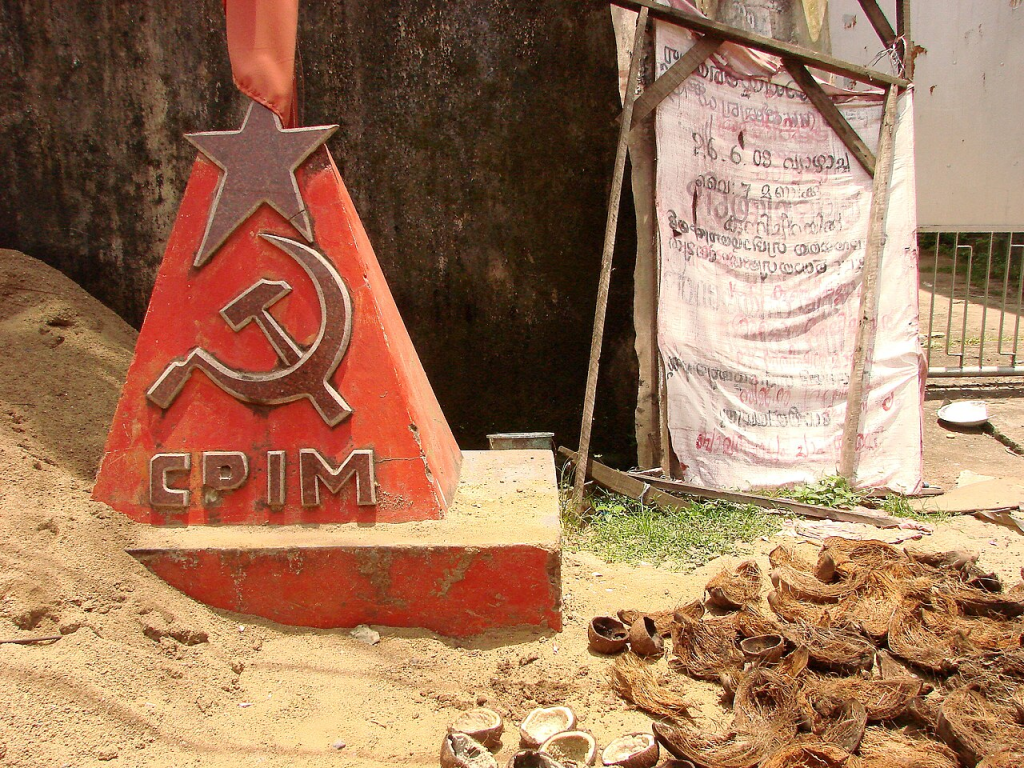
In 15 years of TMC rule, people have felt their living conditions decay. Abstract homilies to ‘democracy’ do not put food on people’s plates or rupees in their bank accounts. Banerjee’s administration also reeked with corruption and mismanagement. For instance, last year, 25,000 education workers were thrown out of work after a Supreme Court ruling found a 2016 hiring process was tainted by manipulation and fraud, as TMC bureaucrats rewarded relatives and friends with placements. The TMC also opposed the massive peasant struggle in 2020 that forced Modi to withdraw his reactionary Agricultural Bill, which would have further immiserated India’s farmers. The party stood thus thoroughly exposed.
This opened the ground for the BJP to deploy its usual religious sectarian ‘communalist’ bile, coalescing the Hindu vote around itself, while also whipping up hysteria by accusing TMC candidates of being ‘Bangladeshi infiltrators’. At the same time, the BJP weaponised the TMC’s reliance on welfare policies and identity politics to outflank them. It promised a ₹3,000 monthly allowance for unemployed youth and women, financial assistance for pregnant mothers, expanded benefits under existing schemes, that 33 percent of government jobs would be reserved for women, as well as free bus travel.
But another factor is the criminal role of the CPI(M) in West Bengal, which quietly encouraged its members to support the BJP (a party they publicly describe as ‘fascist’) in order to kick out the TMC. This unprincipled electoral cretinism did little to benefit the CPI(M), which has been left with only a single seat in West Bengal.
Aside from any particular issue or explanation, these results are ultimately the bitter harvest of the catastrophic errors of the communist left, which also led the state assembly in West Bengal until 2011.
In its post-election analysis, the CPI(M) lamented “the ascendancy of right-wing communal forces led by the BJP, which is a matter of deep concern for all the secular, progressive and democratic forces”. It promised to “take all necessary corrective measures and continue to struggle for the rights of the people and in defence of secularism and democracy.”
We must profess our scepticism. This defence of ‘secularism and democracy’ against ‘right-wing communal forces’ – without a word about class struggle, let alone revolution or socialism – suggests the CPI(M) has absorbed precisely no lessons from this election, nor the communist left’s ignominious, decades-long decline.
The Communist Party’s role in Partition
The communist parties’ defeats in Kerala and Modi’s victory in West Bengal are not isolated events. The road to these “setbacks” was paved by blunders and crimes pre-dating the 1947 Partition of the Indian Subcontinent.
The Indian proletariat has longstanding revolutionary traditions and has produced outstanding figures like Bhagat Singh, who was executed by the British Raj in 1931. The Communist Party of India (CPI) was founded in the 1920s and played a leading role in the radical strike wave against British rule in 1928-29. Attempts by the Raj to repress the CPI and arrest its leaders only enhanced its popularity, and by the end of the 1930s it was a mass force with roots amongst India’s working class and peasantry.
Unfortunately, by this time, the Communist International had degenerated under the leadership of the counter-revolutionary bureaucracy based in Russia, centred around the figure of Joseph Stalin. The privileged caste at the top of Soviet society had usurped the Russian Revolution and was motivated by defending its immediate interests and privileges. This meant curtailing any independent workers’ movements and parties that might conflict with its authority.
M. N. Roy, the founding theoretician of the CPI, was forced out of the party by pressure from the Comintern in 1929. And before the CPI was accepted as an official section in 1935, its leadership was stuffed with compliant stooges. Their subsequent representative in Moscow, Virendranath Chattopadhyaya, was then murdered in Stalin’s purges.
The Comintern imposed the false Menshevik theory of stages on the Indian party, which held that underdeveloped countries must first pass through capitalist development before socialism was possible. This became the ground zero for all of the betrayals that followed. The CPI watered down its programme to democratic demands, which made it indistinguishable from the bourgeois nationalist Indian National Congress of Mahatma Gandhi, which ended up becoming the spearhead for the struggle for independence.
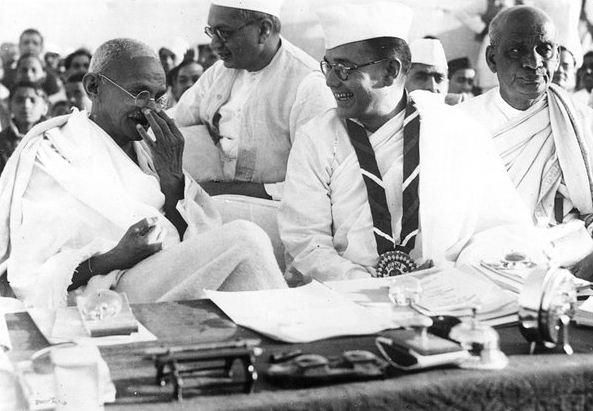
Despite initially taking an anti-war, anti-imperialist position at the outset of World War II, the CPI, under orders from Moscow, performed a volte-face after Hitler’s invasion of Russia in 1941. It cooperated fully with British imperialism and helped to recruit Indian soldiers for the British Army. It also took a sectarian stance on the campaign to end British rule in India, led by Gandhi’s Quit India Movement, instead siding with the Raj and the communal, nationalist Muslim League.
The CPI was rewarded for its service by being granted legal status. It showed its appreciation by using its authority to oppose strikes and desertions from the army. This opposition to independence and collusion with the British cut the CPI off from the struggle against colonial rule for the entire duration of the conflict.
After the war, the struggle for independence was revived, heralded by the 1946 rebellion of 20,000 sailors from the British Indian Navy. The joint Hindu-Muslim strike committee raised socialist slogans. The subsequent revolutionary mass movement should have been tailor-made for the CPI. But following the ‘theory of stages’, the communists uncritically supported Congress as the party most likely to carry through India’s ‘democratic revolution.’ The CPI’s central committee published a ‘Statement of Policy 1947’ declaring it “would proudly extend full co-operation” to Congress leader Jawaharlal Nehru.
This narrow nationalist policy also extended to supporting the Muslim League of Muhammad Ali Jinnah in establishing an Islamic state of Pakistan out of the body of India. As CPI leader P. C. Joshi explained at the time:
“We were the first to see and admit a change in its character when the League accepted complete independence as its aim and began to rally the Muslim masses behind its banner. We held a series of discussions within our party and came to the conclusion in 1941-1942 that it had become an anti-imperialist organisation expressing the freedom urge of the Muslim people that its demand for Pakistan was a demand for self-determination and that for the freedom of India, an immediate joint front between the Congress and the League must be forged as the first step to break imperialist deadlock.”
The CPI even used its lingering authority in the Punjab to garner support for the League’s 1945-46 provincial election campaign. CPI cadre Daniyal Latifi authored the Punjab Muslim League’s manifesto.
In other words, rather than giving a class-based, communist lead to the Indian Revolution, the CPI supported the division of Hindus and Muslims, under the leadership of bourgeois nationalist parties. In the end, Congress betrayed the revolution by brokering the Partition of India in a grubby deal with British imperialism in August 1947. This unleashed a carnival of communal bloodshed in which up to two million people were butchered, and set in motion the sectarian tensions that have plagued the subcontinent ever since.
Nehru repressed the workers and poor in newly independent India on behalf of the parasitic ruling class, which had backed Partition to secure their hold over the country’s wealth. Meanwhile, the ‘anti-imperialist’ and ‘freedom-loving’ Muslim League established a Bonapartist Islamist regime in the newly formed Dominion of Pakistan.
The CPI’s support for this disaster was all justified with the so-called theory of stages, saying that India was not ‘ready’ for socialism. The experience had a terribly demoralising effect on the party’s honest class fighters. Liberal writer Khushwant Singh describes the frustration of CPI activists in his novel Train to Pakistan:
“Lying on a cot in the courtyard of the village Gurudwara, gazing at the stars he thought, ‘Everyone, Hindu, Muslim, Sikh, Congressite, Akali or Communist was deep in it. All that was needed was to divert the kill and grab instinct from communal channels and turn it against the propertied classes. That was the proletarian revolution, the easy way.’ To his anguish, the party bosses would not see it in this light.”
Confusion and class collaboration post-Partition
Having helped bring not one but two bourgeois states into being, the CPI was plunged into disarray. The party vacillated between ultraleft adventurism in the 1950s – such as organising a disastrous armed insurgency in Telangana – and opportunistically cooperating with Nehru’s Congress government, which formed closer links with the USSR in the 1960s.
Nevertheless, the CPI won support for putting up some resistance to the domination of the poor and oppressed by India’s newly independent capitalist class. The party recovered quickly, leading effective struggles for land reform and standing at the head of the trade unions, eventually becoming the second largest party in the Lok Sabha, the lower house of the Indian parliament. However, the party leaders avoided an open revolutionary confrontation with Congress. In fact, they continued to cooperate with Nehru, even after he dismissed India’s first-ever elected communist government in Kerala in 1959.
Growing frustration within the party ranks resulted in a tension between a ‘right’ wing that was closer to Moscow and tended to support Nehru’s ‘socialism’ (in reality, heavily state-managed capitalism), and a ‘left’ wing that favoured armed struggle rooted in the peasantry, inspired by the Chinese Revolution. The Sino-Soviet split eventually gave the impetus to a formal break in 1964 with the founding of the CPI(M) by the ‘left’ wing. Rather than any fundamental ideological difference, the two communist parties simply reflected the divisions between the Russian and Chinese bureaucracies, who were pursuing their own narrow geopolitical interests.
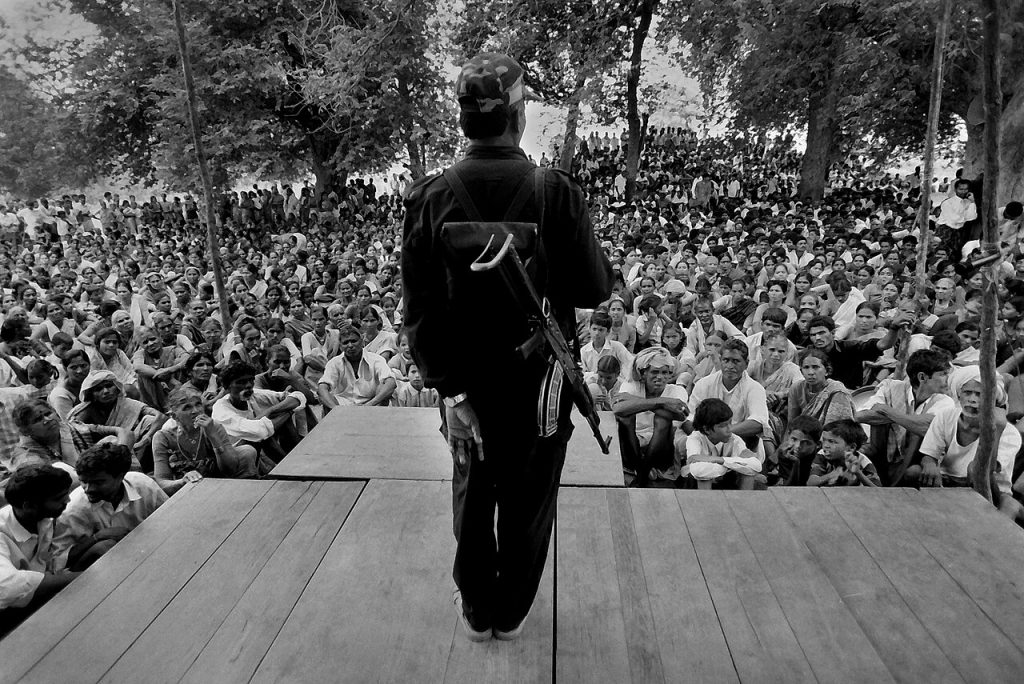
This was demonstrated by a 1967 uprising in Naxalbari, West Bengal, in which peasants and oppressed castes revolted against their landlords and entered into armed struggle. The ‘Naxalites’ opened up a bloody, decades-long and ultimately futile civil war, but garnered sympathy in the countryside as the only bulwark against landlords and capitalists exploiting the land. Not only the CPI but also the CPI(M) – a party literally founded in the image of armed peasant struggle – opposed the Naxalites as “infantile adventurists” and supported their suppression. This precipitated yet another split, producing the Communist Party of India (Marxist-Leninist).
The class struggle roared back onto the scene with India’s ‘emergency period’ between 1975 and 1977, in which the global crisis of capitalism, combined with harvest failures, caused a major economic crisis. The Congress regime of Indira Gandhi moved in the direction of open dictatorship, suspending civil liberties, arresting 100,000 political opponents and brutally suppressing strikes and protests.
The CPI gave a left cover to these scandalous attacks, justifying them as the only answer to the “imminent threat of subversion of our democratic system”. This sent the CPI into a decline from which it has never recovered and broadened support for Jan Sangh, the predecessor organisation to the BJP, as an alternative to Congress.
It also boosted the profile of the CPI(M), whose opposition to Gandhi’s dictatorial methods helped propel it to victory in the West Bengal state elections of 1977 at the head of a Left Front coalition. But these so-called ‘communist statesmen’ had long since abandoned any prospect of organising revolutionary class struggle. They were fully committed to the idea that India was not sufficiently developed for socialism – a convenient cover for carrying out the tasks of Indian capitalism, while protecting the privileges of their new positions.
Tasked with managing one of India’s most populous and economically important states, the CPI(M) put themselves at the service of the capitalists and landlords in holding back the class struggle. The character of the Left Front was expressed plainly by the last CPI(M) chief minister of West Bengal, Buddhadeb Bhattacharjee, who told a meeting of investors in 2006: “I am against strikes. Unfortunately, I belong to a party which calls for strikes.”
The party went from merely cheering on the slaughter of the Naxalites to active participation in crushing their fellow ‘communists’ on behalf of the capitalist exploiters. They also performed such dirty work as the 1979 Marichjhapi massacre, forcibly evicting farmers in the Sundarbans. Moreover, the bureaucrats were never shy about rewarding themselves by dipping into the state coffers.
Bureaucrats become butchers
The emergency period gave way to the ‘neoliberal’ era of the late-80s and early-90s, in which Congress tried to reverse India’s economic decline (hastened by the fall of the USSR) by prostrating its economy to foreign investment.
The CPI(M) and CPI increasingly devolved towards narrow electoralism. They spent a decade swinging between unprincipled alliances with one reactionary capitalist bloc against the other. First, they supported the ‘National Front’ Alliance alongside the BJP (which first emerged as the political front of the fascist RSS) with the excuse of ‘fighting Congress.’ Then, when the National Front government collapsed in 1990, the communist parties manoeuvred into the seven-party ‘United Front’ and contested the 2002 elections as part of the United Progressive Alliance (UPA), under the leadership of Congress – this time with the excuse of ‘fighting the BJP’.
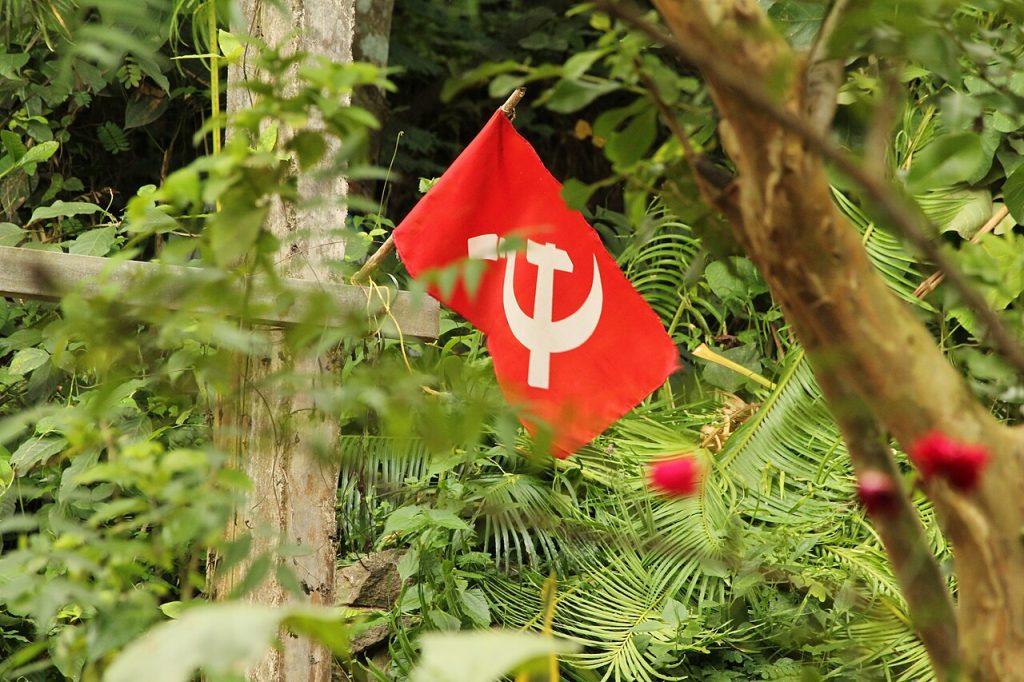
All the while, the Left Front government in West Bengal – which could and should have been a bastion of class struggle and communist resistance – covered all of these shabby electoral pacts with the fig leaf of defending India’s ‘secular democracy’.
But the blackest mark on the history of the CPI(M) came in March 2007, when the Left Front government sent ‘communist cadres’ to help brutally suppress a peasant protest in Nandigram. The peasants were opposing land-grab operations by the Salem Group, owned by the son-in-law of General Suharto, the butcher of millions of communists in Indonesia in the 1960s. On the orders of this capitalist scion, CPI(M) thugs and state police murdered and raped over 100 civilians in Nandigram.
In a final insult, the CPI(M) leaders in West Bengal tried to justify their position ‘theoretically’, arguing that agriculture was not as productive as industry, making it their ‘communist duty’ to clear the way for the Salem Group! This travesty was followed in 2009 by Operation Larlgarh, a military campaign to restore ‘law and order’ in the state by butchering Maoist guerrillas.
The CPI(M) was deservedly thrown out of power in 2011, with the memory of these murderous betrayals still fresh. Having lost its prized position in West Bengal, the communist party leaders attempted to stitch together a broad ‘anti-BJP, anti-Congress’ Third Front, which included right-wing outfits which happened to be opposed to the two main bourgeois camps. This only further discredited them in the eyes of the masses.
The LDF government in Kerala presents a similar story. Having assumed power in 1979, the CPI(M)-led state government granted some concessions, based on ‘Nehruvian’ Keynesian spending, but undermined its authority with corruption and collusion with the bosses – in opposition to workers and the poor.
For instance, in 2020, the LDF government was accused of smuggling gold from the UAE, which has a large diaspora from Kerala. And in 2022, the LDF endorsed Modi’s central government sending forces to crush protests against the construction of a private port by India’s richest capitalist, Gautam Adani. The Minister of Fisheries in the Kerala government, V. Abdurahiman, even condemned the protests as ‘anti-national’. Evidently, the LDF learned nothing from the experience of West Bengal, which helps to explain why they have lost their grip on Kerala.
How the communist parties helped Modi
The Stalinists in India also played a key role in facilitating Modi’s rise to power. Despite having the ear of the masses for significant stretches of time, they failed at every opportunity to point the way towards socialist revolution as the only road out of poverty and squalor. Instead, they tailgated one bourgeois formation after another and discredited the very name of communism with their corruption and class-collaboration. This created fertile ground for Modi’s ‘Gujarat Model’ of aggressive privatisation of India’s state industries, combined with Hindutva demagogy against Muslims and oppressed castes.
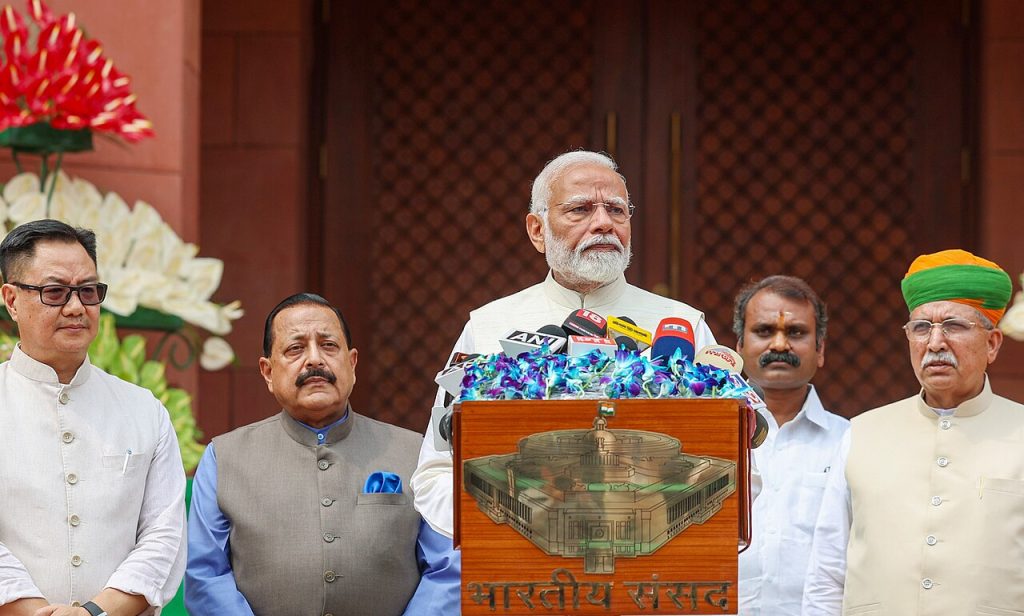
Since Modi’s election as Prime Minister in 2014, the Stalinists have put all of their energies into backing Congress as the only answer to the BJP’s ‘fascism’. The result of this has been to prop up Congress and hasten their own decline. The CPI lost its status as a national party in 2023, while the CPI(M) lost control of the Tripura Legislative Assembly to the BJP. The following year, both the CPI and CPI(M) entered into the Congress-led INDIA coalition in the legislative elections, alongside Hindutva parties like Shiv Sena that stand to the right of the BJP.
In the past several years, India has seen massive struggles by the peasantry, the devastating impact of the COVID-19 pandemic, and two of the biggest general strikes in human history – both called by communist-led trade union coalitions. You would think these conditions would be ideal for the revival of communism as a political force.
But thanks to their shameless class-collaboration and appalling record in power, support for the communist parties has shrivelled to the point that they have been turfed out of their final bastions. The communist parties have taken every electoral “setback” as proof that the masses are ‘too backward’ and ‘reactionary’. This circular reasoning sees them move even further in the direction of opportunism.
When a real mass struggle broke out in 2020, led by the farmers, any serious communist party would have called for joint worker-peasant action to escalate the struggle to bring down Modi. Instead, the communists restrained all of their analysis to defending India’s ‘parliamentary democracy’ from Modi’s ‘authoritarianism’. Sitaram Yechury, a leading cadre of the CPI(M), even said: “We do not want to politicise the farmer issue”!
Then, when Modi launched airstrikes near the line of control in occupied Kashmir, triggering the brief India-Pakistan War in May 2025, both parties lined up behind the national flag and supported Modi’s regime. They went so far as to call off a planned general strike, as they were mindful of the shared “national interest” in defending India’s “democracy.”
Ultimately, the communist parties have no faith in the ability of the working masses to overthrow capitalism and run society: they never did. This scepticism is rooted in the anti-Marxist, Stalinist ‘theory’ that has typified their entire history, leading them down the road of reformism at best and bourgeois nationalism at worst.
A certain CPI(M) document, published in 1992, titled ‘On Certain Ideological Issues’, is instructive. Following the fall of the USSR, it notes a theoretical ‘error’ of the CPI in the 1950s and 60s: namely, they believed the victory of socialism was possible. In fact, the document concludes, capitalism still had room to develop the productive forces. The immediate task today is therefore not socialist revolution, but “completing the democratic revolution”. It defines the CPI(M)’s role as:
“[U]niting with all the patriotic forces of the nation, i.e., those who are interested in sweeping away all the remnants of pre-capitalist society; in carrying out the agrarian revolution in a thorough manner and in the interests of the peasantry; in eliminating all traces of foreign capital; and in removing all obstacles in the path of a radical reconstruction of India’s economy, social life and culture.”
These “patriotic forces” include not just the working class but “the middle peasant and the rich peasant. The urban as well as other middle classes and broad sections of the national bourgeoisie”. This document puts matters squarely. The CPI(M) does not see its task as organising the working class and peasantry for socialist revolution, the conditions for which, they claim, are ripe neither on the world stage nor, especially, in underdeveloped India. Instead, we are told, the task of the communists is to lead the workers and peasants into an alliance with the bourgeoisie to complete the ‘national democratic’ revolution.
This is truly incredible. Globally, the working class has never been stronger and capitalism is in its deepest-ever crisis – the conditions for socialist revolution are not only ripe, but rotten ripe. Meanwhile, India has one the world’s largest economies by GDP, rivalling its old colonial master, the UK. Its pharmaceutical and technology sectors are amongst the most advanced on Earth. It has imperialist interests throughout the subcontinent. It is the world’s most populous nation, with the second-largest working class, which has genuine communist and revolutionary traditions. By what measure are the conditions in India not ripe for socialist revolution?
The backwardness, poverty and inequality in Indian society are features of Indian capitalism post-independence. There is no ‘progressive’ faction of the bourgeoisie and none that is capable of carrying society forward. After all, Congress was in charge for the majority of the time since 1947. Its record of exploitation and repression laid the ground for Modi.
The Stalinists turned themselves into a bulwark against class struggle, with the excuse of defending the ‘national democratic’ revolution, worshipping India’s democracy and Nehru’s constitution, under which hundreds of millions languish in poverty and misery. The excuse of fighting Modi’s ‘fascism’ at all costs is merely the latest manifestation of this rotten strategy, rooted in the bankrupt ‘theory’ of stages. If the masses have now turned their back on the Stalinists, the ‘communist’ parties only have themselves to blame.
A line must be drawn under this litany of failures. A genuine communist party must be founded on the authentic ideas of Marxism, the traditions of Bolshevism and the legacy of genuine Indian class fighters like Bhagat Singh, who was crystal clear about the need to overthrow capitalism through a socialist revolution and quoted Trotsky in his articles. Such a party would be able to retie the knot of history, connecting the mighty forces of the Indian working class with their radical, revolutionary lineage.
We extend a hand to India’s radical workers and youth, disgusted at seeing the banner of communism dragged through the dirt by the Stalinist crooks and class collaborators. Stand with us! The task of building a party worthy of the Indian revolution falls on our shoulders. Join the Revolutionary Communists of India! Inqilab Zindabad!