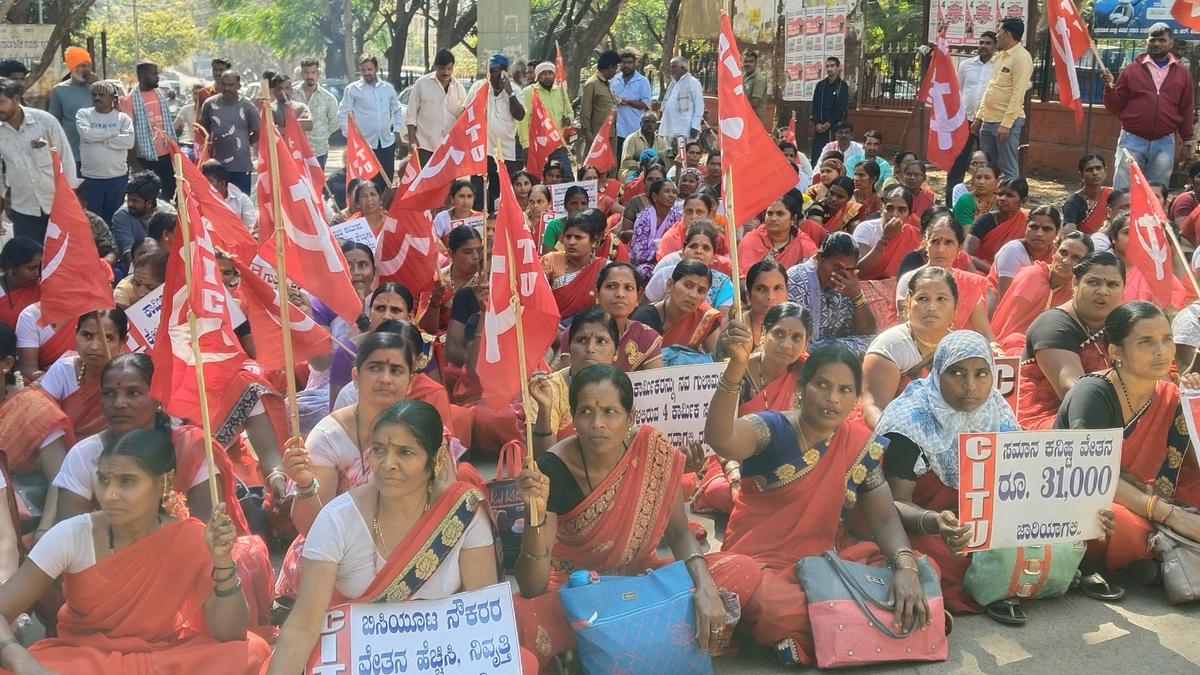
As of November 2025, the Modi-led BJP government has started to bring its new Labor Code into effect. This law represents nothing short of a wholesale decimation of workers’ rights and conditions, aimed at turning us into nothing but raw material for exploitation. The RC(I) supports the Central Trade Unions’ call for an All-India General Strike on 12 to repel Modi’s latest attack!
The growth of Indian capitalism, while impressive on paper, is based on hyper exploitation of the working class, who are treated like beasts of burden by the bosses. But for the capitalists, even the brutal exploitation up until now is not enough.
The new Labor Code has been brought in to benefit the mega-corporations who are the main funders of the ruling BJP. The fat cats and their media barons have long been campaigning for more liberal labour laws so that they can hire and fire workers more easily, as well as removing ‘obstacles to doing business’ around health and safety, all to increase their profits at the workers’ expense.
The new Labour Code reduces India’s 29 existing labour laws into four: 1. Code on Wages, 2019; 2. Industrial Relations Code, 2020; 3. Code on Social Security, 2020; and 4. Occupational Safety, Health and Working Conditions Code, 2020.
The Labor Code was originally brought by the Union government and passed in parliament during the COVID period, without proper discussion, during a time of protest and opposition to Modi’s reactionary agricultural bills and the CAA (Citizenship Amendment Act). It was put on hold due to opposition from workers and trade unions, but now Modi thinks he has an opportunity to deploy it.
The introduction of fixed-term employment under this Code will further casualise an already massively casualised workforce. In India, nearly 90 percent of the workforce are unorganised, and this law would completely casualise the small percentage of contracted, organised workers, stripping away their legal benefits and protections.
The previous laws provided some limited space for trade unions to organise workers. The new law prohibits strikes without issuing a 14-day notice beforehand and also prohibits strikes during conciliation proceedings.
Retrenchment of workers is also made easier. Previously, a government sanction was needed to retrench workers in companies employing below 100 workers. This has been extended to companies employing below 300 workers, which applies to the majority of the workforce, laying the grounds to remove their employment protections.
The criteria and definition of workers and factories have been changed. Previously, plants with 10 workers with power and 20 workers without power were defined as factories, in which workers enjoy more basic safety guarantees. This has now been altered to 20 and 40 workers respectively. Moreover, there is no assurance of eight-hour work days in the new Labour Code because of overtime work, which is made compulsory.
The present law though defines gig workers, it has not recognized them as workers to ensure their rights. It has not addressed their major issues like wages, working conditions etc. Gig workers are working in inhuman conditions and they comprise nearly 2 crore. More workers are joining in gig work due to unemployment. Recently gig workers did numerous big and small strikes to withdraw the 10 minutes delivery time made by platform companies.
The earlier law advocated prosecution of employers for not complying with labour laws, but under the new code, the employer can avoid prosecution by paying a fine, meaning the bosses can literally pay to abuse their employees.
The adoption of neoliberal policies in 1991 led to huge privatisation of industry. The current ruling party, the BJP, and earlier, Congress, followed the same capitalist policies that enrich huge corporations like Adani and Ambani. The new Labor Code will be a further huge setback, doing away with legislation that was brought about after huge struggle and sacrifice by the workers.
So far, the Code has only been implemented in BJP-ruled states. Other states like Tamil Nadu and West Bengal haven’t brought in these rules due to fear of opposition from workers and punishment at the coming state assembly elections.
It is also noteworthy that the BJP, though it passed the law in 2020, has not brought the rules notification until now due to fierce opposition from workers. The Modi government finally passed the law in November 2025 following the victory of its National Democratic Alliance coalition in the Bihar elections.
But the hesitancy by the bourgeois parties and central government should give the workers’ organisations confidence. The ruling class fears their strength!
There is huge opposition from the central trade unions. The joint platform of Central Trade Unions has called for an All-India general strike on 12 February. The Samyuktha Kisan Morcha (SKM) farmers’ union is also joining the general strike. The BJP government is steadfast in its attack on the working class, setting up a major showdown.
10 years of BJP rule has deteriorated the economy and increased the inequality of the people. Unemployment and poverty of the masses have increased to unprecedented levels. Modi and Shah at the head of the BJP and RSS regime have been successful in diverting the masses’ anger and attention into religious lines and caste lines through attacks on minorities, Muslims and Dalits, but this divide-and-rule tactic can only work for so long.
Only a powerful, sustained workers’ movement similar to the farmers’ movement, which led the Modi government to roll back his pro-corporate Agricultural Bill, can lead to the repeal of the new Labour Code.
Workers must use their immense strength to defeat this latest capitalist assault on their rights and conditions, and then turn their struggle into a political campaign against the Modi regime itself, along with the vile capitalist system it upholds.
Down with Modi!
Down with the Labour Code!
All out on 12 February!