The Tamil Nadu Assembly elections were held alongside elections in other states such as West Bengal, Assam, and Kerala. The election witnessed a four-cornered contest. The main contenders were the ruling DMK-led Secular Alliance, consisting of the CPI, CPM, VCK (Viduthalai Chiruthaigal Katchi), Congress, MDMK, DMDK, and the Indian Union Muslim League on one side; the AIADMK-led alliance, comprising the BJP and its allies, on another; and, on the third and fourth fronts, the newly formed Tamilaga Vetri Kazhagam (TVK) led by film star Vijay and the Naam Tamilar Katchi (NTK) led by Seeman.
Bipolar Politics
Tamil Nadu has witnessed three Congress governments since India became a republic. However, ever since the DMK, under the leadership of C.N. Annadurai, came to power in 1967, the strength of the Congress Party has been reduced to a few pockets of influence.
The principal rivals in Tamil Nadu politics since 1972 have been the DMK and the AIADMK. The AIADMK was formed after actor-politician M.G. Ramachandran split from the DMK. He later led the party to victory and became Chief Minister in 1977.
The communist movement once had a significant influence among workers in industrial centres such as Coimbatore and Chennai, as well as among agricultural labourers in the delta districts of Thanjavur and Nagapattinam. However, this influence has gradually declined, partly due to the policy of electoral alliances with the major Dravidian parties.
The DMK and AIADMK are both offshoots of the Dravidian Movement, which emerged in the former Madras Presidency. The movement was built upon the principles of anti-Brahminism, rationalism, regional identity, federalism, social justice, opposition to caste hierarchy, and welfare-oriented policies. It fought against the under-representation of backward castes in education and government employment and challenged caste-based discrimination in society.
For more than five decades, the DMK and AIADMK have dominated Tamil Nadu politics. The communist parties have often aligned themselves with one or the other of these formations during elections.
In the present election, however, both major Dravidian parties suffered a significant setback. Actor-politician Vijay’s Tamilaga Vetri Kazhagam (TVK) won 107 seats, while the DMK and AIADMK secured only 59 and 47 seats respectively. The CPI and CPM won two seats each. The results represented a major challenge to the dominance of the Dravidian parties that had ruled the state for decades.
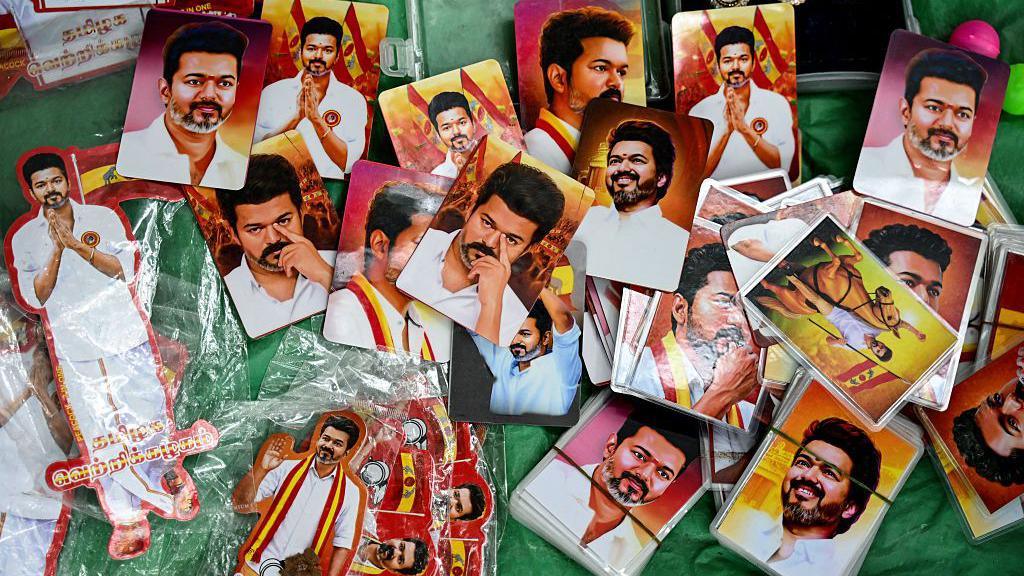
Vijay launched his party only two years earlier, in 2024, and was widely regarded as a political outsider. Although he had spent nearly two decades building an extensive fan network and carrying out welfare activities through his fan clubs, his formal political career began only recently.
Many observers expected him to align with one of the established political alliances due to his inexperience in electoral politics. However, he chose to contest independently, a decision that ultimately worked to his advantage. Many voters were disillusioned with the established parties because of allegations of corruption and dissatisfaction with their policies. As a result, Vijay was perceived as a fresh face, untainted by the controversies associated with the traditional parties.
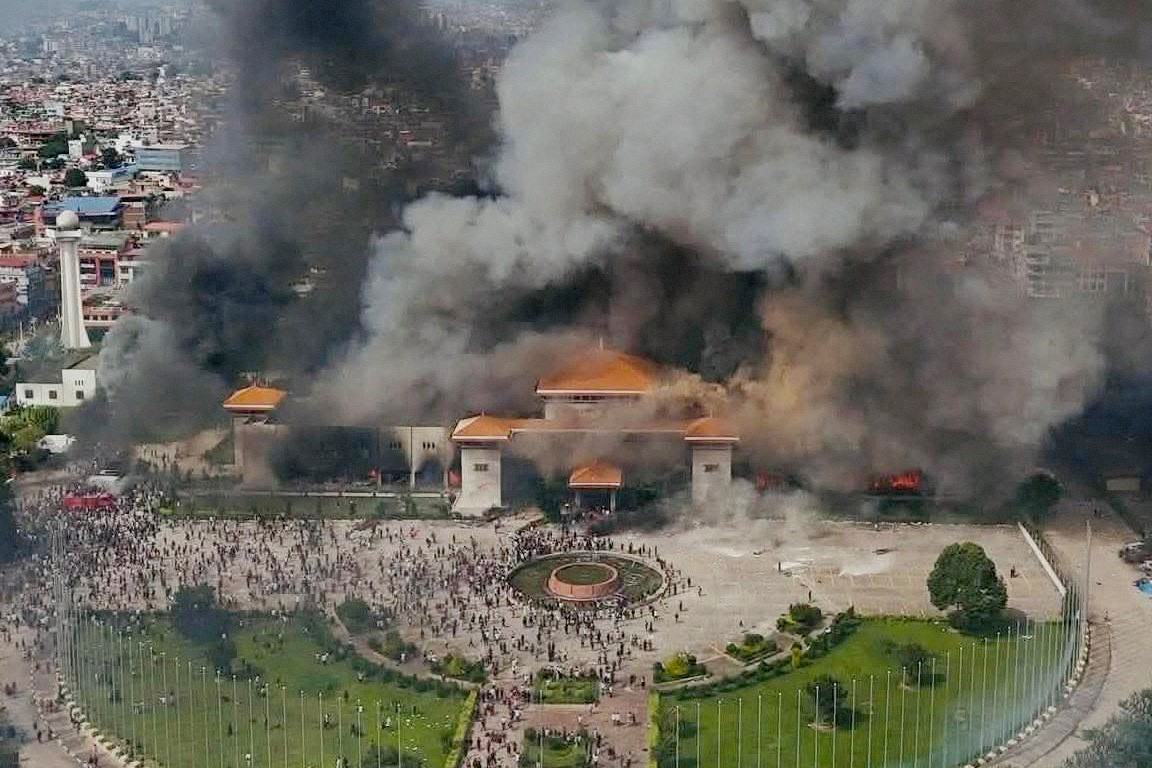
This phenomenon is not unique to Tamil Nadu. Across the world, voters have increasingly sought alternatives to established political formations. From the rise of independent figures in Nepal and Sri Lanka to new political currents emerging in Europe and North America, many people have expressed frustration with traditional political elites and have looked for new leadership.
From a socialist perspective, however, these new political forces often remain within the framework of capitalism. While they may promise change and reform, they do not challenge the underlying economic system responsible for inequality, unemployment, and social insecurity. As a result, they remain limited in their ability to address the fundamental problems faced by working people.
Political Earthquake
The election results were widely regarded as a political earthquake, as the actor’s victory was largely unexpected. It came as a huge surprise. Vijay’s enormous fan base played a significant role in securing this electoral success. Gen Z voters, many of whom are fans of the actor, along with large sections of Tamil Nadu’s youth and masses who were disillusioned with the corrupt rule of the Dravidian parties, voted in large numbers for the new party.
People were generally fed up with the corruption of the ruling parties, which attempted to win elections by distributing cash for votes. In some constituencies, cash payments ranging from ₹2,000 to ₹5,000 per vote were allegedly distributed. As a result, there was widespread resentment against the political establishment, which was channelled into votes for TVK.
Opportunism and Class Collaboration
Vijay has formed the new government with the support of the Congress, CPI, CPM, VCK, and IUML, all of whom were previously part of the secular alliance led by the DMK. The government also enjoys the support of 27 MLAs who split from the AIADMK-BJP alliance.
The CPI and CPM have justified their outside support to the new government on the grounds of preventing BJP rule through central intervention and gubernatorial powers. However, rather than functioning as a revolutionary opposition, the communist parties have chosen to support the new government. Consequently, the new administration is unlikely to provide any real alternative to the capitalist policies pursued by the Modi government and the previous DMK regime.
The communist parties, which once enjoyed considerable support and influence in Tamil Nadu, have gradually lost their mass base. Their policy of class collaboration through alliances with capitalist parties such as the DMK, AIADMK, and Congress has disillusioned many youth and working people. These capitalist parties are united when it comes to attacking workers’ rights. For example, the DMK government suppressed the sanitation workers’ protests in Chennai and the Samsung workers’ protests by arresting their leaders.
The Dravidian Movement
The Dravidian Movement was built upon the principles of anti-Brahminism, rationalism, regional autonomy, federalism, social justice, and opposition to caste hierarchy. It fought for better representation of backward castes in education and public employment and advocated welfare-oriented policies.
E.V. Ramasamy Periyar was one of the foremost leaders of this movement. He was initially a member of the Congress during the freedom struggle before joining the Justice Party and later founding the Dravidar Kazhagam (DK). Through the Self-Respect Movement, he campaigned against the Hindu caste system and superstitious beliefs while also expressing support for socialist ideas.
Periyar visited the Soviet Union and was impressed by its development. His weekly magazine Kudi Arasu (“People’s Government”) was the first publication in Tamil to publish the Communist Manifesto by Karl Marx and Friedrich Engels, as well as Bhagat Singh’s essay Why I Am an Atheist. The latter was translated into Tamil by the communist leader Jeeva.
Periyar strongly opposed the imposition of Hindi as the sole official language by Congress-led central governments. This opposition culminated in the anti-Hindi agitations of 1965, during which many students were killed in clashes with the authorities.
The DMK, which emerged from a split within Periyar’s DK, came to power in 1967 riding the wave of this movement. Cinema played a crucial role in the success of the Dravidian Movement. Leaders such as C.N. Annadurai and M. Karunanidhi were scriptwriters and lyricists, while M.G. Ramachandran (MGR), who later founded the AIADMK, was one of Tamil cinema’s biggest stars.
The use of films to promote Dravidian ideas and social reform helped the movement gain mass support. The DMK also benefited from the backing of backward classes, who constitute a large section of Tamil Nadu’s population. The movement’s demands for affirmative action and social justice further strengthened this support.
Like the Congress, the Dravidian parties initially pursued state-led capitalist policies after independence. However, the advent of the neoliberal era led to large-scale privatisation. Secure and permanent employment has increasingly disappeared, while neoliberal policies have contributed to unemployment and growing inequality.
Despite its progressive achievements, the Dravidian Movement remained essentially reformist and unwilling to challenge capitalism itself. It distanced many people from class-based politics and often divided society along ethnic and linguistic lines. Therefore, it cannot serve as a genuine alternative to the BJP’s Hindutva agenda. Only the independent organisation of the working class around a socialist programme can provide such an alternative.
Communist Movement
Tamil Nadu also possesses a rich history of communist struggles. Cities such as Chennai and Coimbatore witnessed the growth of strong trade unions organised by the Communist Party of India. Leaders such as Singaravelar, Jeeva, and many others played important roles in organising workers.
The communist movement also enjoyed considerable influence in the delta districts, including Thanjavur and Nagapattinam. Communist activists organised landless agricultural labourers, most of whom were Dalits, against feudal landlords. Leaders such as P. Srinivasa Rao played a significant role in these struggles.
Communists and agricultural workers often faced brutal repression while defending their rights. One of the most tragic examples was the Keezhvenmani Massacre of 1968, when 44 Dalit agricultural labourers were locked inside a hut and burned alive by the hired goons of upper-caste landlords. It is noteworthy that the DMK government was in power when this massacre occurred.
Independent Left Assertion
There exists a significant political vacuum at the regional, national, and international levels. This vacuum must be filled by the communist movement. If left unaddressed, it may instead be occupied by populist figures such as Vijay, by various strands of Dravidian politics, or even by reactionary right-wing forces such as the BJP. None of these forces can provide a solution to the capitalist crisis confronting ordinary people.
All major parties have promised welfare measures, but such policies alone cannot resolve the deep income inequalities affecting the masses. Although Tamil Nadu is one of India’s most industrialised states, it continues to face unemployment and rural backwardness. Honour killings and caste atrocities against oppressed communities remain common.
While cities have witnessed significant industrial development, many villages continue to experience poverty, social backwardness, and caste oppression. This uneven development highlights the contradictions of the current economic system.
Soon after the election results, the Modi government increased fuel and LPG prices. The US, Israel war on Iran, which has contributed to rising fuel and gas prices globally, has sparked protests among workers across India. The burden of the capitalist crisis continues to be shifted onto the shoulders of ordinary people.
Only an independent, revolutionary, democratic movement rooted in class politics and guided by a socialist programme can strengthen the communist movement and provide a genuine alternative for working people in India.