Manipur is one of the “seven sister states”, in the far northeast of India. In recent years, it has been rocked once again by sectarian and ethnic divides, whipped up by the BJP and the courts. Split between the Hindu Meiteis and the Christian Kuki and Naga communities, the whole state has become a powder-keg. The history of this divide goes all the way back to the British Raj, and the failure of the Indian bourgeoisie to develop Indian society.
The Imphal Valley in the centre of Manipur takes up just 10% of the land, at around 1800 square kilometres, but holds 60% of the state’s population, who are mainly Hindu Meiteis. The hills surrounding the valley cover the rest of Manipur and hold 40% of the population, the majority of whom are the Christian Naga and Kuki communities. These groups are scheduled tribes, meaning the Indian state reserves a certain number of places in state jobs and universities for people from these backgrounds, on top of providing a meagre social security and other ‘protections’. For example, the majority in Manipur, the Meiteis, do not have the right to buy land in the hill areas, but the tribal groups do.
A conflict a century in the making
Manipur’s history has always been tied between India in the west and Myanmar in the east.
The area that became Manipur was a princely state for hundreds of years. In 1824, it became a protectorate of the British East India Company, after one of the most bloody and brutal wars the EIC ever partook in. This war, the First Anglo-Burmese war, led to an entire generation of fighting men killed off, and eventually, after two more wars, would lead to the East India Company annexing the entirety of Burma, and turning Manipur into a protectorate. The Treaty of Yandabo, formed in 1826 after the war, delimited a boundary between India and Burma. Just as the British had practiced elsewhere, however, a line carved between the native communities in the area was needed to foster sectarianism and divide and conquer the peoples there.
This came a decade later, with the Pemberton line. To the British, the region served as nothing but bargaining chips for its own interests of expanding its influence in South Asia. On the recommendation of two commissioners, Captains Pemberton and Grant, the Kabaw valley, where many Kuki live, only 150km from the capital of Manipur, Imphal, was handed to Myanmar. The two countries were divided along the Pemberton Line, explicitly to split the “Sooties” – the Sukte, a Kuki-Zo clan, between the two countries. Of course, here, just as in the rest of India later, or in Ireland, or myriad other places, the locals were never asked.
After the Soldiers’ Revolt in 1857, the rule of the EIC was consolidated into the Raj in 1858. The conquest of Burma was completed a few years later in 1885, after the third Anglo-Burmese war. After that point, the whole area was administered collectively, but the movement of people was still firmly restricted by the Pemberton line.
As part of the Raj, a ‘two-tier’ model was created in Manipur. Just as in the rest of India, caste was codified, legalised and set in stone for residents. The hill communities were administered separately to the Meiteis in the valley.
In 1937, Manipur and Burma’s dividing line was frozen in place, as Burma became a separate colony. After the fall of the Raj, Manipur joined India, and the Pemberton line was set in stone. The other borders in the “seven sister states” in the east of India further cut up the various ethnic groups in the area. The ground was set for these deep wounds to flare up.
In Nagaland, the national question flared up, with Nagaland declaring independence from India a day before India did. Manipur’s joining of India in 1949 fueled a nationalist, separatist trend that became an armed insurgency.
Since partition, the centrifugal tendencies throwing India apart have only continued. The national question in the whole area took on a violent, reactionary and bitter character, just as it would in Punjab in the 80s, and as it did across the former British Empire.
This is why the Armed Forces Special Powers Act (AFSPA), originally a colonial law to allow the violent dispersal of the ‘Quit India’ movement, lives on as a vital tool in the Indian state’s arsenal. The mass resistance movements since partition have been fought by the Indian state with naked, brutal violence. AFSPA essentially gives the Armed Forces carte blanche to stop, search, arrest, disappear, maim and kill anyone they desire. It simply requires a state or region to be legally declared a “Disturbed Area”, which Manipur and the surrounding areas have been since 1958, after events in Nagaland threatened the union.
The Seven Sisters have been wracked by inter-ethnic violence and sectarianism through post-Partition India. From 1992–97, the Kuki Students’ Organisation declared a “Quit Notice”, giving ethnic Nagas 24 hours to leave Moreh, a town in Manipur. This move, reflecting the struggles between the rich, property-owning layers of both communities for control over the land and profitable smuggling routes, led to a 5 year long ethnic conflict, with hundreds of civilians killed, on both sides of the divide. Formerly peaceful, mixed-ethnicity villages were cleansed and split along these communal lines. Throughout the last two centuries, smaller-scale ethnic violence within small communities and villages has become, in Rosa Luxemburg’s words: “… the tiresome and monotonous business of the day, and the end is no closer.”
A brief pause was given by the suspension of hostilities in 2008 through the tripartite Suspension of Operations between Delhi, the Manipur government and the Kuki organisations – the KNO and UPF. No sooner was the ink dry that the capitalists began their loot. Facilitated by Modi’s ‘Act East’ Policy, and the Industrial and Investment Policy of Manipur 2013, the state government is encroaching on Tribal lands, beginning to attempt to mine the resources under the hills.
Life in the “Seven Sister States”
The “Seven Sister States” have a huge variety of cultures and traditions, distinct from the majority of India. Over 160 Scheduled Tribes live in these states, with over 220 languages spoken in these areas.
Underneath the beautiful landscapes of the ‘Seven Sisters’ lie vast stores of natural resources, particularly when it comes to energy. Crude oil and natural gas has been pumped out in vast quantities from Arunachal Pradesh and Assam, to refineries in Bihar and further. India has a poor infrastructure for mapping out oil reserves, and despite this, nearly 150 million tons lie untapped. There are nearly 200 billion cubic meters of natural gas still untapped. The Digboi field, set up in 1889 by the British in Assam, is one of the oldest continuously producing oilfields in the world. There are vast coal seams in Meghalaya. A third of the hydroelectric potential of India is in Arunachal Pradesh also, with a whopping 168 dams planned in the state.
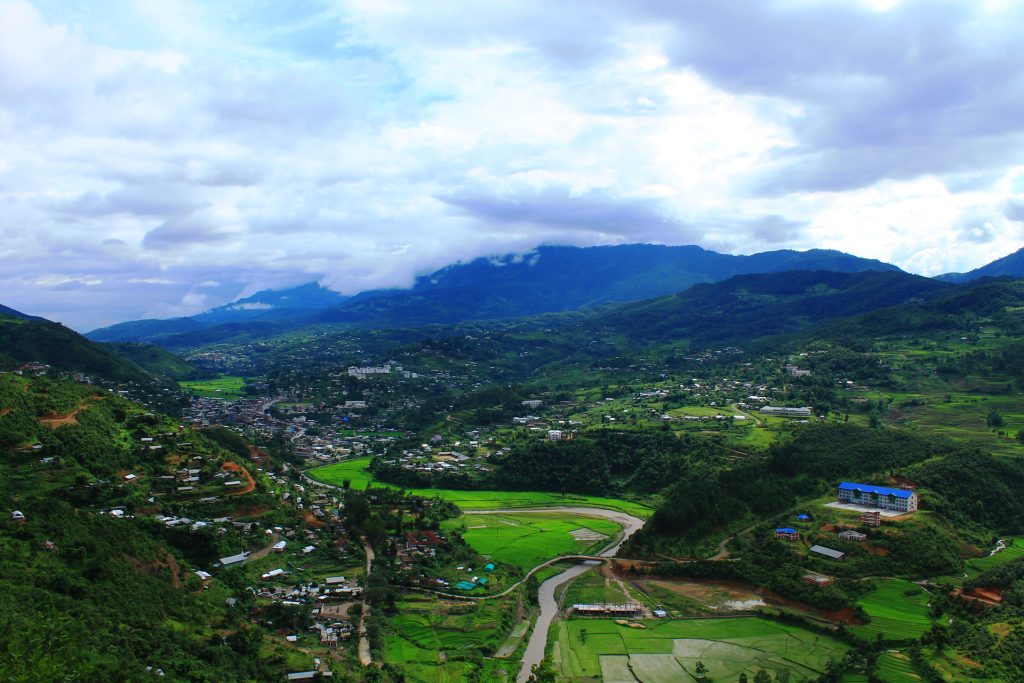
In Manipur, the land is rich with limestone (needed for cement), chromite (used for the production of stainless steel), high value metals like platinum, nickel and vanadium, and more.
The whole area is wracked by uneven development. Around the resource-rich deposits, rather than huge infrastructure to extract these resources, single track railways and winding, 2 lane roads connect up the oil belt. Export in Manipur is a paltry Rs. 10 crores a year. Industry is just 10% of the economy. Only around 45% of young people are employed, with around a quarter of them employed in agriculture, mainly cotton and now increasingly poppy farming. 85% of the rest are employed in services, i.e. in retail, transport or other precarious work. The final, tiny portion – 5% of the youth – are employed in any kind of industry. Most of this work is as cheap labour for construction companies, with an even smaller percentage – a few thousand – working in factories producing spices, ginger, tea and more.
Why is this the case? Because the deposits sit in places like Ukhrul, Kamjong, Churachandpur – i.e. in the hill areas where the Scheduled Tribes reside, where the Meitei majority are unable to buy land to exploit for mining rights.
Hundreds of state of the art hydroelectric dams are planned down the road, whilst young people in Manipur haul bricks and spin cotton threads on a handloom. This is the combined and uneven nature of the development of the economy in the ‘seven sisters’. Much like Kashmir, the periphery of India is much more akin to an internal colony, with its comprador ‘managers’ at the top of the state, allowing cheap resources to be streamed out of the state, than it is an integral part of the ‘union’.
Capitalism, to use Marx’s phrase, “must nestle everywhere, settle everywhere, establish connections everywhere.” The Scheduled Tribes’ protected status over the resources in Manipur is a direct challenge to this. But the Indian ruling class, backwards and parasitic, cannot facilitate this through a direct investment in heavy industry; it cannot force the ‘seven sisters’ to open up through development of the productive forces. For decades, trying to challenge the Scheduled Tribes, deal with the armed insurgencies, and get at the resources was too unprofitable to bother with. Now, with the slowing down of the Indian economy, a new impetus is given to ramp up the semi-colonial extraction in the ‘seven sisters’. And the key tools to clear the path forward of any resistance to this are backroom deals, corruption, and the return of the horrors of sectarianism. This is the backdrop to the events in 2023.
The Coup in Myanmar
On 1 February 2021 there was a military coup in Myanmar, deposing the government of Aung San Suu Kyi. This takeover sparked widespread protest, a revolutionary wave and civil war. This led to over 5.3 million people being displaced and around 62,400–95,600 people fled to India, the majority of whom were from the Chin branch of the Kuki-Chin ethnic group. The Kuki-Chin group is the main group that unites all related tribes in the northeast states of Manipur, Mizoram and Assam and tribes from Myanmar and Bangladesh. Chin are the specific tribes living in the Chin region of Myanmar.
India never signed the 1951 UN refugee convention, so the Kuki-Chin community fleeing the violence in Myanmar were classified as illegal immigrants. But the borders of India cut right through the traditional region the Kuki-Chin community lived in. Because of this, many Kuki families span the border into Myanmar. Of the 60,000 people who fled to India, the neighbouring state of Mizoram, which has a large Kuki-Chin community, absorbed 40 thousand. Of the rest, 6–12 thousand settled in Manipur.
The central government in Delhi sent orders to deport the 40,000 people back, as they were deemed illegal. Mizoram did not agree to this demand. The official reason given for this demand was the risk of drug trafficking and illegal weapons. In reality, however, this was a shallow demagogic appeal from the BJP, who have ramped up their anti-migration rhetoric, especially in the ‘seven sisters’.
Part of this motivation is the relationship Delhi is fostering with the military junta in Naypyidaw for its own imperialist domination of the region, summed up in its “Act East” policy. A key lever for this is the Kaladan transit project, a multi-million dollar multi-mode transit project, allowing goods to flow from Kolkata into Myanmar along the river, sea and a new road, financed by the Ministry of External Affairs. Myanmar, for its part, is helping India to clear out the insurgents through military expeditions. Allowing 40,000 Kuki-Chin refugees, who have a bitter hatred for both Delhi and the Junta, to enter the country would be bad for their bloody business.
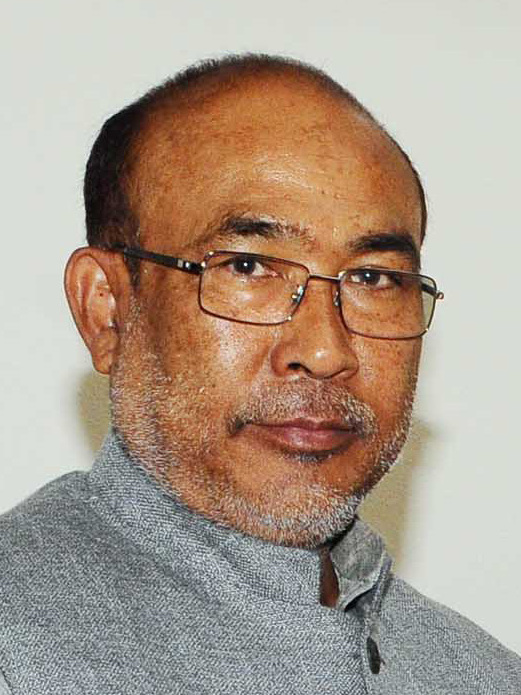
In Manipur, under the BJP’s Chief Minister, Biren Singh, a carnival of reaction was prepared. The bogeyman of immigration was raised to drive fear into the workers, and divide and rule the Meitei community.
The aftermath of the events in Myanmar added fuel to the fire. Previously, Manipur and the surrounding areas served as a corridor for the smuggling of heroin from the Golden Triangle in Myanmar. After the civil war, Manipur in particular has had a boom in the cultivation of poppies, fuelled by the huge profits to be made by the landowners, and the desperation and poverty that grips the hill communities, particularly in the Kuki-Zo-Hmar areas. The lack of fruitful jobs, and the dangled carrot of huge profits, drag thousands into backbreaking, illegal and precarious labour.
The state seized on this for their propaganda. The scheduled tribes were labelled ‘narco-terrorists’ by the politicians and media. Singh did not hesitate; he publicly called the Kuki “foreign backed narco-terrorists, waging war in Manipur” on not one but multiple occasions. On 28 May 2023, he said:
The fight is not between two communities […] The crisis in Manipur is purely a war against the Indian union by Myanmar and Bangladesh-based Kuki militants in collaboration with militant groups operating in Manipur.
These statements deeply angered the Kuki-Zo community as a clear attempt to scapegoat Kuki groups as radicals and terrorists, ignoring the armed Meitei groups in the valley, such as the Arambai Tenggol, who are responsible for countless atrocities.
These tribal groups could clearly see what CM Biren Singh was trying to achieve. The immediate response was a rapid increase in the widespread anger and discontent that already existed, which only needed a spark to ignite.
This spark followed rapidly, in the form of an order by the high court to extend Schedule Tribe (ST) status to the Meiteis, and thus allow the richer Meitei layers – and those conglomerates seeking mining rights – to buy out the land from under the Scheduled Tribes. The BJP, leaning on the sectarian anger in Manipur to boost their popularity, had pushed things too far. The situation exploded beyond their control.
ST status order
Constitutionally the High court does not have the legal authority to alter, amend or grant ST status to any community. But the law is a flexible thing in India, especially when there is money to be made.
The seeds of this move were sown a decade prior. In 2013, the Scheduled Tribe Demand Committee Manipur/Meitei Tribe Union (STDCM) filed a petition for ST status. The STDCM is a right-wing, nationalist, petty-bourgeois outfit, using the question of the Scheduled Tribes to distract from the corrupt, crisis-ridden society in Manipur. Instead of questioning why it is that young, poor Meiteis cannot find jobs or employment, the leadership of this movement seek to profit from wielding this base against the other Scheduled Tribes.
This petition was ignored by the state government for a decade, to use on a rainy day. That day was the 27th of March 2023.
On 27 March 2023, a single judge bench – led by the right-wing Hindutva nationalist acting Chief Justice MV Muralidharan – heard this case. And instead of just asking for a status report on the ethnographic report commissioned a decade prior, he instead immediately directed the Manipur government to “expeditiously consider” and recommend the Meitei community for ST status, and gave this task a 4 week deadline. The High court did not invite representatives of the Kuki and Naga community to discuss the implications of this move. Before the March 2023 court order, Biren Singh’s BJP government wanted to push the Meitei ST demand to please their massive valley voter base, but they were politically terrified of the backlash from the hill tribes. Now, they were ready for a fight. The state government hid behind the High court: “The court ordered us to do this, so we must comply.”
Once people heard of this manoeuvre, the tribal communities were incensed. The tribal bodies took their case to the supreme court. Their case was slammed by the CJI DY Chandrachud. He told the High Court in Manipur that the power to classify a community as a Scheduled Tribe stands with the parliament and president.
But for the government of Manipur, a court order is a court order. Why let the legal technicalities get in the way of business?
Clashes break out
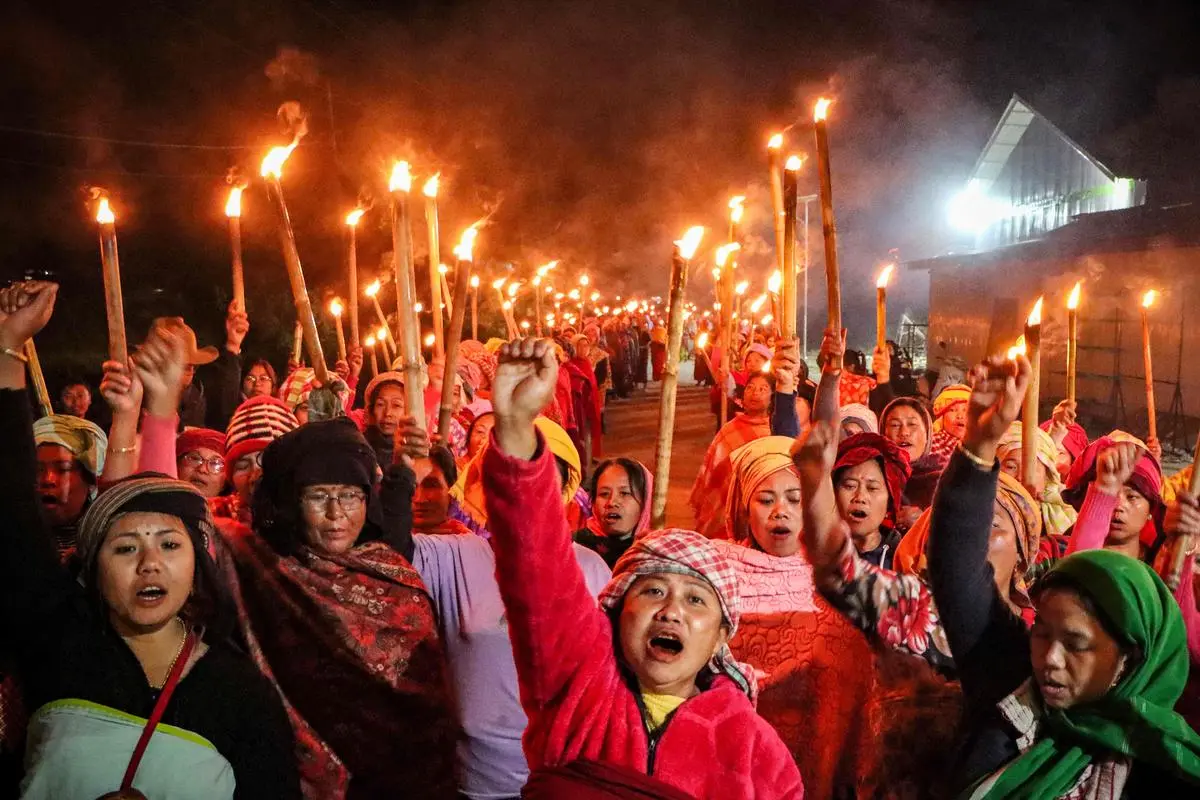
The All Tribal Students’ Union Manipur (ATSUM) launched a Tribal solidarity march in the hills to protest the Meitei ST demand. At the border of the Kuki-dominated Churachandpur district and the Meitei-dominated Bishnupur district, clashes broke out. After this, more clashes broke out and spread like wildfire across Manipur.
The state responded with a complete internet shutdown and shoot-on-sight orders. Mobs, heavily backed by radicalized local militias like the Arambai Tenggol (Meitei) and hill village volunteer groups (Kuki), stormed police stations and state armories. Over 6,000 firearms and over 600,000 rounds of ammunition were stolen. Despite multiple government deadlines and amnesty offers over the next two years, only a small fraction of these weapons have been recovered.
Marx famously said that history repeats itself: first as tragedy, the second time as farce. Just as the initial Partition of India led to mass displacement, violence and death, the BJP’s games in Manipur led to the same tragic result. Meiteis from the hills were forced to go to the valley, and the Kukis were forced to go to the hills. It was the poorest communities which faced the most widespread displacement. As a result, the border areas connecting the hills and valleys turned into active war zones. The Indian Army and Central Reserve Police Forces (CRPF) had to step in to create physical “buffer zones” patrolled by over 40,000 security personnel to keep the two communities apart.
A turning point in the riots was the release of a 30 second long video on 19 July. The footage showed two women from the Kuki-Zo tribe being stripped naked, paraded down a road, publicly groped, and dragged to a field by a large mob of men. What happened to them is unclear, but we can presume – and the Kuki-Zo community also believed – that they were raped and murdered. This video had an immense impact across India. It forced even Modi to crawl out of his cave and speak. But the PM spoke less about the humanitarian crisis and more about why the video was allowed to be released. His entire strength went to removing this video from all platforms.
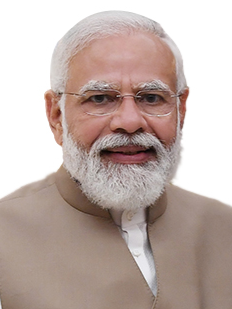
Prior to the video, Prime Minister Narendra Modi had not made a single public statement about the civil war raging in Manipur since it had started on 3 May 2023. Less than 24 hours after the video went viral, the Prime Minister stood outside Parliament and broke his months-long silence, stating his heart was “filled with pain and anger” and promising that “the guilty will not be spared”.
Local authorities knew about this incident but planned to bury it, as the video was not from 19 July, but 4 May 2023. This was the reality of the violence the BJP had unleashed from day one. An official police complaint (FIR) had been filed by the victims’ family two and a half months prior. Yet, the Manipur police had made absolutely zero arrests until the video leaked online and caused national criticism. The main culprit was arrested within hours of the leak. The Supreme Court subsequently transferred the investigation of the video and several other sexual assault cases to the Central Bureau of Investigation (CBI) and moved the trials outside of Manipur to ensure a fair trial.
Biren Singh saw this and still held his seat for 2 years straight. Under heavy pressure, he was finally forced to resign on 9 February 2025. President’s rule was imposed on Manipur on 13 February 2025.
Impacts of the conflict
According to reports released by the Manipur Social Welfare Department, more than 12,600 children have been displaced and forced to live in cramped relief camps. Out of these, the government itself explicitly flagged that over 100 children were found to be severely traumatised, showing advanced clinical signs of PTSD that require immediate professional psychiatric intervention. These numbers vastly underestimate the true toll. The true number of displaced children is closer to 22,000. A comprehensive psychiatric study examining conflict-induced displacement in Manipur relief camps reported that 65.8% of the internally displaced population suffered from PTSD, while an additional 15.2% suffered from severe, constant anxiety.
More than 60,000 people depend on relief camps to survive. These relief camps, like the ones in Mizoram, are overcrowded with no basic facilities like water, toilets and healthcare.
There is nowhere else for these people to go. Villages were burned down in the conflict, and the communities do not have the funds to rebuild them. Even if they did, the conflict is still raging, and the villages would be razed again.
The entire state has ground to a halt. Education has collapsed in Manipur. Most of the schools and universities are relief camps. Kuki students at NIT Manipur had to flee the Imphal valley, and so have no diploma for their studies. As such, there has been an exodus of students to other parts of India. 2,500 students were evacuated by the government to other states.
Manipur relies on two main National Highways (NH-2 and NH-37) for all its food, medicine, and fuel. Because these highways pass through the hill districts, Kuki groups frequently blockaded them to protest, while Meitei groups counter-blockaded valley supply lines. These blockades caused severe shortages, driving the price of essential commodities like cooking gas, petrol, and life-saving medicines to extortionate black-market rates.
The state economy, which was heavily dependent on agriculture, handloom weaving and tourism, has collapsed. This, in one of the biggest countries in the modern era. Far from building a stable, modern state, the lives of the poor and youth in Manipur, especially in the hills, more closely resemble feudal life. This is the backwardness of modern India. This is the barbarism that capitalism creates for its own profit.
As Rosa Luxemburg said:
Violated, dishonored, wading in blood, dripping filth – there stands bourgeois society. This is it [in reality]. Not all spic and span and moral, with pretense to culture, philosophy, ethics, order, peace, and the rule of law – but the ravening beast, the witches’ sabbath of anarchy, a plague to culture and humanity. Thus it reveals itself in its true, its naked form.
The way forward
Trotsky, in ‘An Open Letter to the Workers of India’, writes that:
In the event of the Indian bourgeoisie winning a victory over their British masters, they would immediately establish a new regime of exploitation, preserving the old social relations, the caste system, and the landlord oppression—only substituting Indian exploiters for the British.
80 years later, this perspective has been proven true word for word. Under this capitalist system there is no future for workers and youth in the ‘seven sisters’, because Indian capitalism is incapable of developing this area for the needs of the people there. It can only continue the looting, the fomenting of pogroms, and the brutal, direct military oppression it has enforced on the region for decades.
Workers and youth can have no illusions that another Chief Minister, Chief Justice, a new party, or anything else can resolve the crisis in Manipur. This is not a crisis of bad government, of bad policy, but the necessary result of capitalism and imperialism itself. Thousands are killed. Millions are displaced, for what? The profits to be made in the rocks underfoot. This is the logic of a system which has no rationality, that cannot be reformed from within.
The only way forward is to overthrow this rotten capitalist system and these bloodthirsty criminals. The workers, peasants, and tribal peoples of all the ‘seven sister states’ must unite across ethnic lines. They must join hands with the wider Indian and international working class to smash the capitalist state. This is what they are really afraid of.
It is for this reason that we call for:
- First and foremost, the rights of all oppressed peoples, all across India, to self determination, and protection of the rights of the Kuki and Naga communities to the lands and resources of the hill areas around the Imphal Valley.
- Nationalisation without compensation of the mining, farming and energy companies in order to use the wealth and resources of the Seven Sisters to develop infrastructure and work prospects for workers and youth. The profits from these firms should be used immediately to rehouse and re-settle all those who have been dispossessed in this struggle, to render the camps obsolete.
- For a rational plan of production to ramp up the creation of modern homes, factories and universities to bring Kuki, Naga and Meitei workers and youth out from the exploitation in the hills.
- A mass movement to overthrow the state government, which has bloodied its hands by whipping up this sectarianism.
- For a Socialist Federation of South Asia as the only way to solve the problems of the Seven Sisters and India.
The workers and students of Bangladesh have shown that with proper organisation, workers and youth can topple this regime. But what is missing in Manipur, and across all of India, for a very long time, has been a mass party of workers and youth, built on the ideas of Marxism, capable of showing the way forward to the radicalised masses of South Asia to end this cycle of barbarism once and for all. This is what we are building in the Revolutionary Communists of India. When the workers and youth of Manipur are organised around such a bold communist programme, no force on Earth will stop them.