
“Those in power think citizens are cockroaches and parasites. They should know that cockroaches breed in rotten places. That’s what India is today.” These are the words of Abhijeet Dipke, founder of the Cockroach Janata Party (CJP) – the ‘Cockroach People’s Party’, a play on Prime Minister Narendra Modi’s ruling Bharatiya Janata Party (BJP), the ‘Indian People’s Party’.
In just a few days, the party garnered over 22 million followers on instagram, 220,000 followers on X, signed up one million members, and has the ruling BJP government terrified.
What started as a satirical online joke has become a lightning rod for the profound anger and indignation of India’s youth that is terrifying our rotten ruling class.
“I too am a cockroach”
On 15 May, Chief Justice of India Surya Kant launched a vitriolic tirade at India’s unemployed youth at a Supreme Court hearing. Responding to a lawyer calling for increased transparency in the hiring process for cushy senior advocate roles in the so-called justice system, he said the following:
“There are youngsters like cockroaches, who don’t get any employment or have any place in the profession. Some of them become media, some of them become social media, RTI [Right To Information, i.e. anti-corruption] activists and other activists, and they start attacking everyone.”
These contemptuous words sparked a huge uproar. Kant’s callous and dismissive attitude epitomised the contempt that the Indian ruling class shows for young people today. Dipke, at the time an Indian student based in Boston, USA, appropriated the Chief Justice’s insult, posting the simple question on social media: “What if all the cockroaches came together?”
A slogan sprung up and caught on spontaneously: “Main bhi Cockroach”, or “I too am a cockroach”. A party website and sign-up page soon followed.
Over 22 million young people have flocked to the new Cockroach Janata Party’s instagram account in recent weeks. While India’s state has attempted to swat down the group’s social media channels on the grounds of ‘national security’, accusing their millions of followers of being bots paid for by Pakistan, the cockroaches keep cropping back up.
The accidental success of the CJP is an expression of the rage of India’s Gen Z, who are seeking a way to organise against a corrupt ruling class that offers them no future and thinks of them as vermin. The Revolutionary Communists of India say: the ‘cockroaches’ must clear out the capitalist’s rot!
Capitalist contempt for the youth
India is the most populous country on earth, with a median age of only 29.8 years, meaning the youth carry huge weight in society, comprising 371 million people. However, prospects for young people under Indian capitalism today are bleak.
UN figures estimate youth unemployment across the board rose from 13.8 percent to 15.2 percent in the last year (an increase of 5 million) – and that is despite official figures counting any informal job taken in the last 12 months as employment.
Meanwhile, graduate unemployment stands at 40 percent, and 66 percent of unemployed people are graduates or postgrads. This means that even Indian youth from more middle-class backgrounds are usually denied stable employment. To make matters worse, India’s higher education admissions system is riddled with corruption and mismanagement.
Every year, India holds the National Eligibility cum Entrance Test (Undergraduate), NEET-UG, which prospective students must pass to enter medical school. This year, millions of students who studied for months or years for this notoriously gruelling exam will have to resit, after a question paper appeared to have been leaked online.
This was devastating news, particularly for students from poorer backgrounds, who need to wait another year for a second attempt, whilst finding a way to support themselves in the meantime. 17 suicides have already been attributed to this debacle. Protests previously broke out against the NEET-UG in 2024, amidst suspicion that richer students were cheating their way to coveted placements.
Now, in response to the latest NEET-UG scandal, thousands of ‘cockroaches’ have been camped out in New Delhi for a week. They have defied police threats, physical violence and sweltering heat, to demand the resignation of Education Minister Dharmendra Pradhan.
Millions of Indian youth are resentful at having opportunities for a decent life arbitrarily snatched away from them. They are faced with the reality that hard work and ability are no match for wealth and connections. They are understandably frustrated and pessimistic about the future.
It is in this context that young people all across India immediately identified with the spirit of defiance contained in this new ‘party’. Overnight, the ‘cockroaches’ formed a mass party! There is now talk of the CJP running in the Bankipur by-elections.
India’s ruling class desperately tried to put the genie back in the bottle (or should that be, ‘the cockroaches back in the pantry’?) Chief Justice Kant even tried to backpedal in a pathetic statement, calling the youth “pillars of modern Indian society”. But at the same time, the Ministry of Electronics and Information Technology has banned the website and social media accounts of the party. Dipke also claims the accounts were hacked by the BJP. He was slapped at a recent CJP rally and he and his family have faced threats from Modi’s goons.
These brazen attempts to silence the voice of young people show the fear of our elites. Capitalist India is indeed a rotten place, and the ruling class know how easily they could be swept aside if the workers and youth were organised together in a conscious political movement. The ruling class feel the hot breath of the Gen Z revolutions on their necks, which have been sweeping through South and South East Asia over recent years. The mood of rage and hatred for the establishment, which erupted into revolutionary struggles in Bangladesh and Nepal, also exists in India.
Let us not forget, it was precisely the layer now organising in India – middle-class graduate youth, facing unemployment and a complete lack of prospects – who brought down Modi’s pawn Sheikh Hasina in Bangladesh. What started as a movement of these layers fighting corrupt quotas for graduate jobs soon turned into a heroic struggle, first of the students then of the broad masses, against the regime itself.
The ruling parasites in charge remember all this vividly.
In the conditions in India which are not dissimilar to those in Bangladesh, any accidental point of expression for this rage of the youth could easily take on a life of its own.
The cockroaches demand a future!
The CJP’s official website has a section for sympathisers to post their grievances. Thousands have been posted, on all sorts of issues: the anti-Muslim rhetoric of the BJP, the rampant corruption in government, the exorbitant interest rates on educational loans, and the completely inept handling of exams. Dipke created a five-point manifesto around these grievances:
- No Chief Justice shall be granted a seat in the Rajya Sabha [Upper House of the Indian Parliament] as a post-retirement reward.
- If any legitimate vote is deleted, the Chief Election Commissioner shall be arrested… [to combat electoral fraud].
- Women shall receive 50% reservation (instead of 33%) without increasing the size of Parliament and 50% of all Cabinet positions shall be reserved for women.
- All media houses owned by the Adani Group and Reliance Industries [owned by Adani’s partner in crime, Ambani] shall have their licences cancelled to make way for independent media.
- Any [politician] who defects from one party to another shall be barred from contesting elections and holding public office for 20 years [in opposition to careerist manoeuvres].
While this is far from a socialist programme, or even a worked-out programme of democratic reforms, this manifesto does honestly reflect some of the genuine aspirations of India’s youth to combat the nepotism, chauvinism and corruption of India’s political and media establishment. Perhaps more significantly than the manifesto itself is the fact that it has been deleted from the internet on the orders of India’s government!
Since returning home to India, Dipke has launched rallies in major cities like Delhi, Lucknow, Pune and Amritsar, to make what was satire a reality. Thousands of predominantly young, educated Indians have rallied to the cause with the main demand of the resignation of Indian education minister Dharmendra Pradhan.
Throughout the rallies, there has been a clear emphasis on unity between all religions, all castes and all sexes. This is a rejection of the reactionary, culture war approach to politics that keeps Indians divided and in misery.
The CJP phenomenon is a clear antidote to the pessimism of Indian liberals and so-called ‘lefts’ who claim that India is on a path to fascism and that the BJP and Modi are all powerful. The movement of cockroaches is a clear rebuke to all the other Indian political parties, who have failed to give a voice to the rage of the Indian youth.
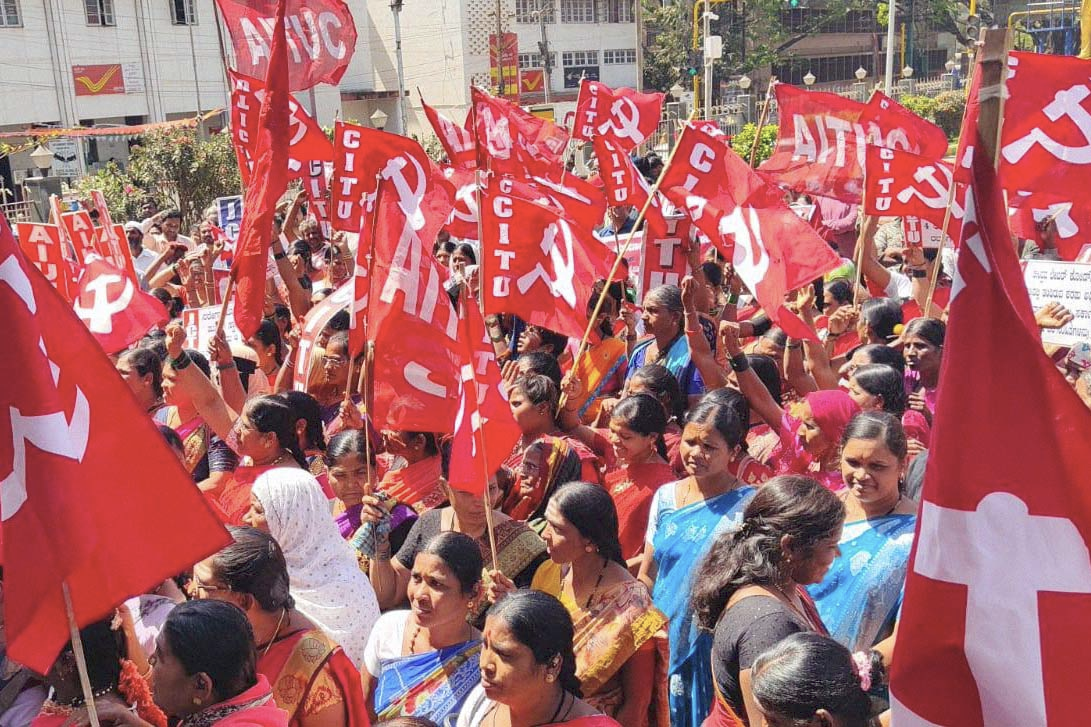
Congress, the traditional party of Indian capitalism, has a decades-long legacy of poverty and repression that helped to pave the way for the rise of Modi’s Hindutva chauvinism in the first place. Meanwhile, India’s once-mighty communist parties, who lost power in Kerala in April’s elections, are completely discredited after years of class collaboration, betrayals and corruption.
The CJP reflects a healthy and understandable rejection of all political parties in India, which in one way or another have exposed themselves as servants of the same unjust system, which rewards the rich and punishes everyone else. As Dipke said in an interview with Al Jazeera, and later repeated on the CJP’s website:
“We are not here to set up another political Party. We’re not here to holiday in Davos on the taxpayer’s salary slip, or rebrand corruption as ‘strategic spending’.”
Wither the cockroaches?
It is unclear how far this movement could develop. At the time of writing, CJP supporters in New Delhi have been camped out for four days, on an indefinite protest, until Education Minister Pradhan resigns over the latest NEET-UG scandal.
The Revolutionary Communists of India give our wholehearted support to these protests. Our comrades were present in New Delhi and spoke to angry students there about the rot at the heart of Indian society. Protestors spoke to us of their frustrations with the education system, the gruelling process of the NEET, and their anger at the prospects they faced.
Instintively, many linked their struggle to wider problems – the genocide in Gaza, the rise of bigotry and Islamophobia, the climate crisis. But a few also expressed scepticism about the leadership of the CJP, about the tactic of peaceful protest, and about remaining a purposefully formless ‘pressure movement’.
For this reason, we must ask: what is the way forward? The million who initially signed up, and those who have joined the rallies, must form action committees across every major city in India and become the backbone of the party. Beyond this, the party must broaden its demands beyond reforms to education, and policies aimed specifically at students and the unemployed. Above all, an appeal must be made primarily to the Indian working class, and demands that respond to the needs of the workers must be incorporated.
The student movement in Bangladesh, which brought down the hated Sheikh Hasina, provides a clear lesson. The students led the movement and provided the spark, but it was when the broad masses, including important sections of the working class, joined with the students and shut down society, that the regime fell.
Together, Indian workers and youth have the potential to topple Narendra Modi and the BJP, and establish a democratically planned socialist society that would put an end to the corruption, oppression and precarity that plague the country. A society managed by working people and the youth could put India’s vast resources and productive capacity to work, facilitating free and high-quality education, as well as full employment.
The potential is great. Across South Asia, in just the last three years, we have seen a wave of ‘Gen Z’ revolutions on India’s doorstep. Mass strikes and protests already erupted in the National Capital Region this year, incurring a savage state crackdown.
Academics and so-called ‘theoreticians’ constantly complain that India is ‘swinging to the right’, that young people are not interested in politics and so on. But the CJP is concrete proof of the exact opposite. Rather than being disengaged, the anger of the youth is furiously searching for an outlet. What we are witnessing is the embryo of the Gen Z revolution in India. This is what has struck fear into the hearts of the elite.
This is the real significance of the CJP, whose existence implicitly poses the question: who is it that should control society?
What we answer emphatically is the organised working class and youth, the overwhelming majority of India! But for all its potential strength, the energy of the masses is not enough, as can be seen in the defeats and setbacks of the revolutions throughout the subcontinent. What is needed is a programme that can galvanise the movement of the working class and youth into a weapon of class war!
The Revolutionary Communists of India offer an open hand to the ‘cockroaches’: let’s discuss the way forward! We say: why stop at sweeping away just one rotten education minister? Let’s clear out the entire filthy nest of gangsters and swindlers at the top!